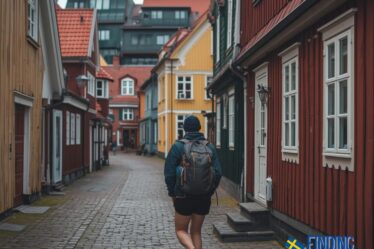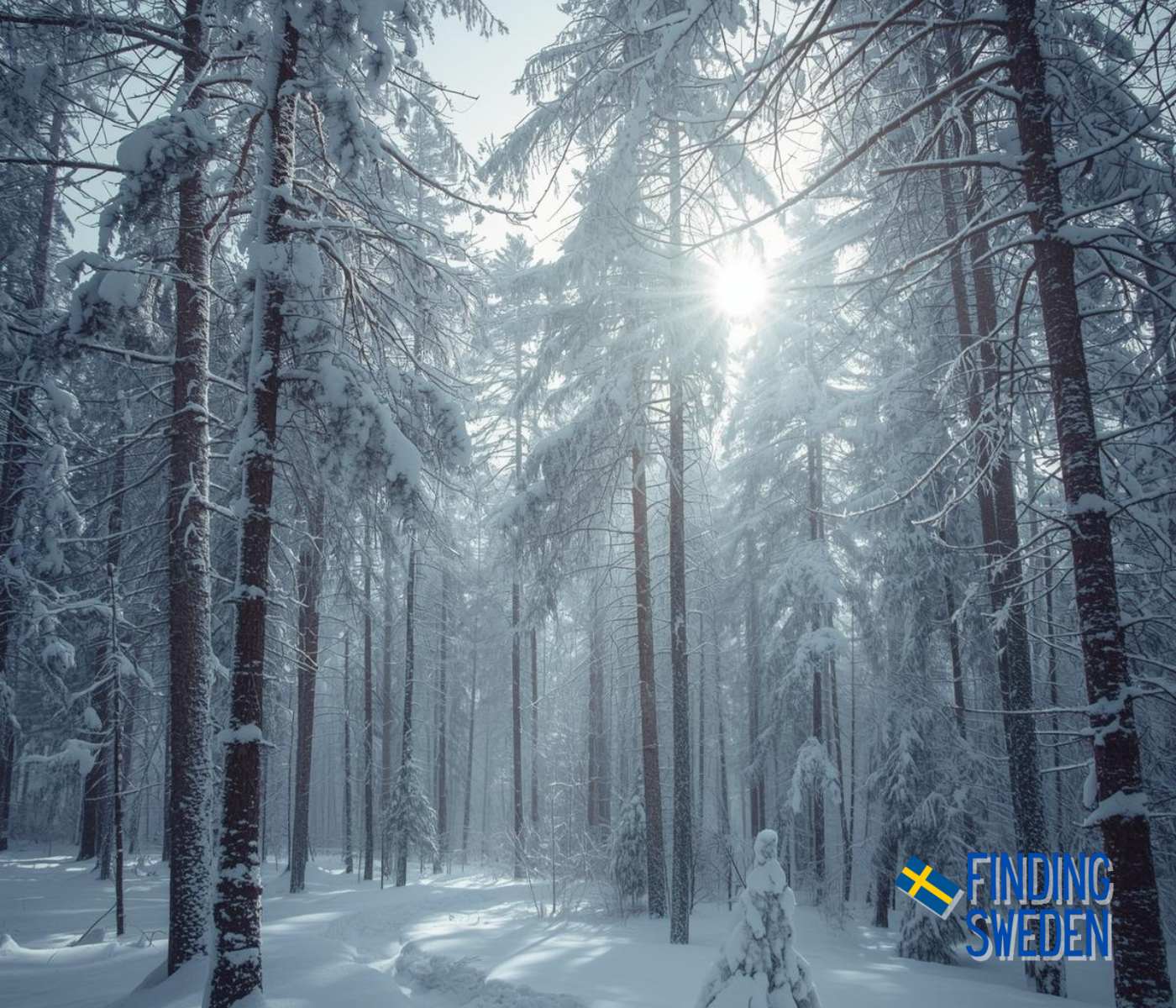
Imagine landing in a country where you can walk across privately owned forest, swim from a quiet shoreline, pick wild berries for your breakfast, and pitch a tent for the night without asking anyone for permission. Not on a paid tour, not inside a national park, not because nobody is watching, but because society is built around the idea that nature should be accessible.
In Sweden, that idea has a name: allemansrätten, often translated as the right of public access or the freedom to roam. It is one of the most powerful reasons Sweden can feel “bigger” than it looks on a map, especially for visitors used to fences, no trespassing signs, and permission based access.
- You may walk, hike, ski, and cycle across most land, even if it is privately owned
- You must always respect the home zone around houses and cabins
- You can usually camp with a tent for one night without asking permission
- You may not camp on cultivated land or where it risks disturbing livestock
- You are allowed to pick wild berries, mushrooms, and flowers that are not protected
- You must not damage trees, break branches, or take wood from living trees
- Open fires are allowed only when conditions are safe and no fire ban is in place
- You are responsible for leaving no trace and taking all trash with you
- Dogs must be kept under strict control, and leashed during sensitive wildlife seasons
- Special rules can apply in national parks and nature reserves and override general access rights
It is a principle with teeth
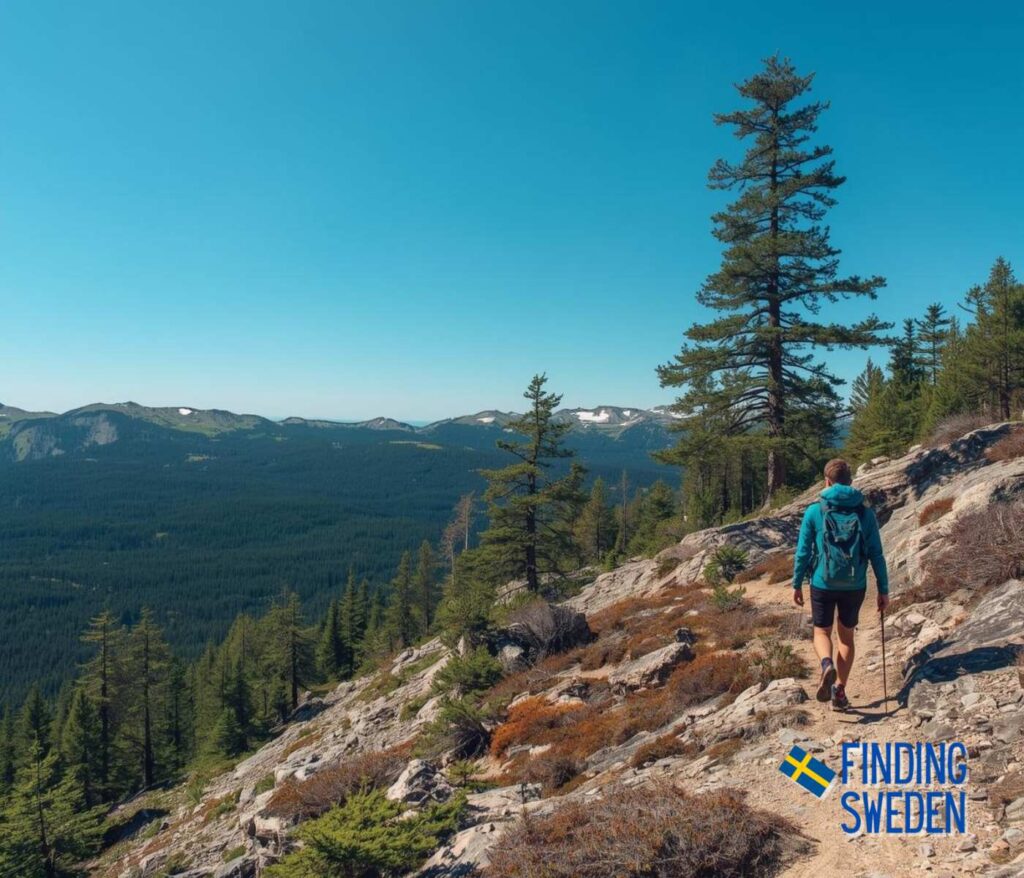
Allemansrätten is not a single law you can look up and memorize like a speed limit. It is a protected principle in Swedish society that is backed by several laws and local rules that draw the boundaries. The core is easy to remember: you are welcome in nature as long as you do not disturb and do not destroy.
That simplicity is the whole point, and also the trap for first time visitors. Sweden gives you freedom, but expects you to behave like you belong there.
The invisible line americans miss
The most important boundary is not “private land” versus “public land.” The boundary is the home zone, the area around someone’s residence where privacy matters. You can pass through the countryside, but you cannot treat someone’s home as part of your scenic route.
In practice, this means you should keep enough distance that people at the house should not reasonably see you or hear you while you stop for a meal, take a break, or camp. The more open the landscape, the more distance you need.
This is why Sweden can feel so permissive and so strict at the same time. You can roam widely, but you must not turn someone else’s daily life into your experience.
Camping that feels almost too easy
The part that surprises most americans is that wild camping is often allowed for a short stay. You can usually pitch a tent in nature for a night, sometimes two, without contacting the landowner, as long as you choose a sensible spot and stay out of the home zone.
There are also clear moments when the answer becomes no. Do not camp on cultivated land, do not set up where crops grow, and avoid areas with grazing animals. And if you are a larger group with multiple tents, the expectation shifts toward asking permission because the impact is bigger.
The Swedish version of camping freedom is less about “you can do anything” and more about “you can do a lot if you stay light.”
Fires are where tourists get it wrong
Sweden’s camping culture often includes cooking outdoors, but the rules around fire are taken seriously and can change quickly with conditions.
A good mental model is this: even when it is allowed, you are responsible for every consequence. That responsibility includes choosing a safe surface, keeping the fire small, staying away from dry vegetation, and fully extinguishing everything before you leave. Fire bans can also be issued locally, and they can be enforced.
There is also a detail many visitors never hear until they arrive: do not make fires on or next to bare rock. Rocks can crack and scar permanently, and in some environments embers can sink into the ground and smolder.
If you want the Swedish outdoors feeling without the risk, a small camping stove is the local default for a reason.
Foraging is real and it is part of the culture
Allemansrätten is one reason Sweden’s relationship with food feels grounded in landscape. In season, it is common to pick berries and mushrooms, and visitors are generally allowed to do the same.
But it is not a free for all. Some plants are protected and cannot be picked, and protected areas can have additional restrictions. The Swedish approach is moderation and knowledge. Take what you will actually use, learn what you are picking, and leave enough for wildlife, regeneration, and the next person.
If you want a uniquely Swedish travel moment, this is it: walking into a forest that belongs to someone else, gathering a handful of berries, and realizing it is normal.
Water access is part of the same idea
Many americans think of roaming as hiking and camping, but in Sweden it also extends to water culture. Swimming by the shore is generally accepted. Boating is common. In many places, you can briefly stop and enjoy the shoreline without needing a designated beach.
That said, the same privacy logic applies near homes, and protected areas can add their own rules.
What allemansrätten does not give you
This is the part that prevents misunderstandings.
Fishing is not automatically included in the freedom to roam. Driving off road or using motor vehicles is not covered. Hunting is a separate world with separate rules. And even when something is generally allowed, local regulations in national parks, nature reserves, and other protected areas can override the default.
Think of allemansrätten as a broad permission to be in nature, not a blank check for every activity you can imagine.
One detail that changes trips for dog owners
If you travel with a dog, Sweden has seasonal expectations meant to protect wildlife. During spring and summer, dogs must be kept on a leash, and in reindeer husbandry areas leash expectations are stricter. Even outside the strict period, keeping your dog close is strongly encouraged if you are moving through wildlife rich areas.
This can change how you plan routes, especially in the north where reindeer are part of the landscape rather than a novelty.
How to use it as a traveller without being “that tourist”
The fastest way to understand allemansrätten is to plan a day where nature is not a scheduled activity, but the space between activities.
Drive a back road, stop when a lake looks inviting, walk a trail that is not on a top ten list, eat outdoors, then camp quietly somewhere sensible and leave early with no trace. The experience feels intimate because it is not packaged, and it feels safe because the social contract is real.
That is the unusual part. Sweden does not just have scenic nature. Sweden has a working agreement that lets visitors step into it.