
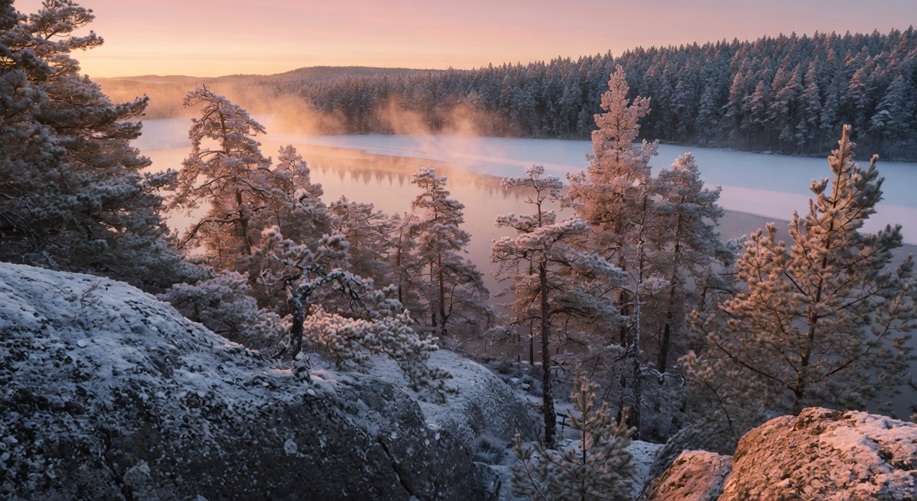
Tiveden is a forested national park in southern Sweden, located between the lakes Vänern and Vättern. It is known for its compact size combined with a high level of variation in terrain. Instead of wide landscapes or long sightlines, the park is defined by close range features and a landscape that changes frequently over short distances.
The terrain is largely shaped by the last ice age. When the inland ice retreated, it left behind large quantities of broken rock, which today form extensive fields of boulders, steep rock faces, and narrow passages. In some areas, the rocks are arranged in ways that create natural corridors and tight gaps, such as the well known Stigmanspasset. Elevation changes are frequent but moderate, and the ground is rarely even. This affects how people move through the park, as hiking often involves stepping over rocks and roots rather than following flat trails.
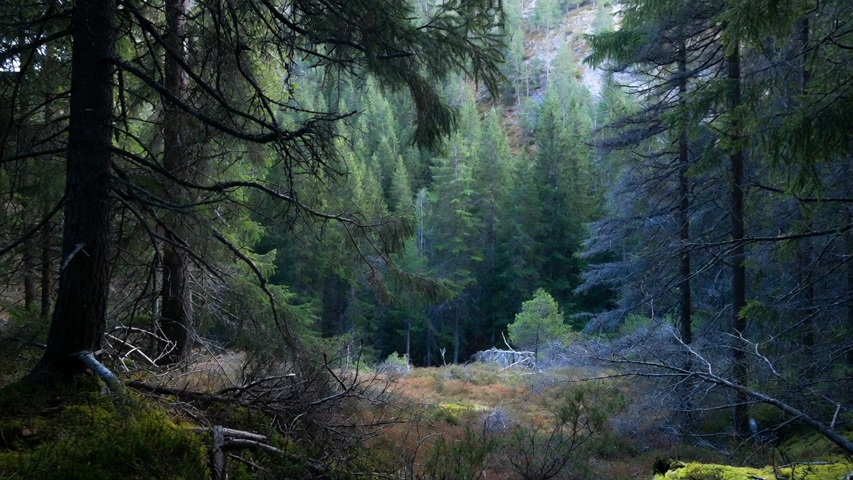
Tiveden is also notable for its forest structure. Compared to much of southern Sweden, which has been heavily shaped by forestry, this area contains a higher proportion of older and less managed forest. Trees of different ages grow together, and dead wood is commonly left in place, contributing to biodiversity. Moss and lichen cover large parts of the ground and rock surfaces, and the forest floor tends to be dense. The combination of geology and vegetation creates a layered environment where visibility is often limited to shorter distances.
The park contains a number of small lakes and ponds, many with clear water and relatively undisturbed shorelines. Lakes such as Stora Trehörningen and areas like Vitsand provide accessible entry points and natural resting spots. The water is typically calm and reflects the surrounding forest, and in some places there are sandy sections suitable for swimming. These features are integrated into the forest rather than forming large open spaces.
There are around 30 kilometers of marked trails within the park, with varying levels of difficulty. Some routes are short and relatively easy, while others involve more physically demanding sections over uneven terrain. The trails are clearly marked and maintained, which allows visitors to navigate the area without specialized equipment. At the same time, the nature of the ground means that even shorter distances can take more time than expected.
Historically, Tiveden was known as a difficult area to cross. The dense forest and uneven terrain made travel slow, and the region gained a reputation as a place where people could move without being easily seen. This background is still relevant in understanding the structure of the landscape, even though the park today is organized and accessible.
Access to Tiveden is straightforward by car, with several parking areas located near the main entrances. The park lies within driving distance of cities such as Stockholm and Gothenburg, although it is not directly connected by major transport routes. Public transport options exist but require coordination between train and bus services, and the final distance often involves limited schedules.
Accommodation options are mainly small scale. There are campsites near the park, as well as cabins and lodges in the surrounding area. Camping is a common choice, as it allows direct access to the forest environment. Nearby towns such as Karlsborg and Laxå provide additional options, including hotels and services.
Seasonal changes affect the appearance and conditions in the park. Summer brings full vegetation and softer ground, while autumn introduces clearer sightlines and more variation in color. Rain can make the terrain more demanding, particularly on rock surfaces, but does not limit access to the trails.
Tiveden stands out because of how much variation it offers within a relatively small area. The combination of glacial geology, older forest, and integrated water features creates a landscape where conditions change frequently over short distances. This makes it a destination where the focus is on movement through the terrain rather than on reaching a single viewpoint or landmark.

It looks amazing!! Are there more places like this in Sweden?