
Sweden has become one of the world’s most advanced countries when it comes to recycling and waste management, to the point where the country has at times imported waste from other nations in order to keep its waste-to-energy facilities operating efficiently. For many people outside Scandinavia this sounds almost absurd. In most countries garbage is viewed as a growing problem that fills landfills and creates pollution. In Sweden, waste gradually became something closer to a resource. Today less than one percent of Swedish household waste ends up in landfills, a figure that places the country among the global leaders in waste recovery and recycling. This transformation did not happen quickly or through a single environmental campaign. It developed over decades through infrastructure investments, cultural habits, government regulation, district heating systems, and a population that generally trusts large public systems to function properly.
One of the reasons Swedish recycling works so efficiently is that the entire society is built around making sorting waste easy and routine. In many apartment buildings there are dedicated recycling rooms located directly inside or beside the property. Instead of throwing everything into a single garbage container, residents separate paper packaging, newspapers, colored glass, clear glass, metal packaging, hard plastics, soft plastics, batteries, light bulbs, electronics, food waste, and general trash. For Swedes this often becomes second nature from childhood. A person moving into their first apartment already understands the system because they grew up with it at school and at home. Recycling therefore becomes less of an environmental statement and more of a basic social expectation. Someone who refuses to sort their waste properly may be viewed as inconsiderate in the same way as someone ignoring traffic rules or making excessive noise late at night.
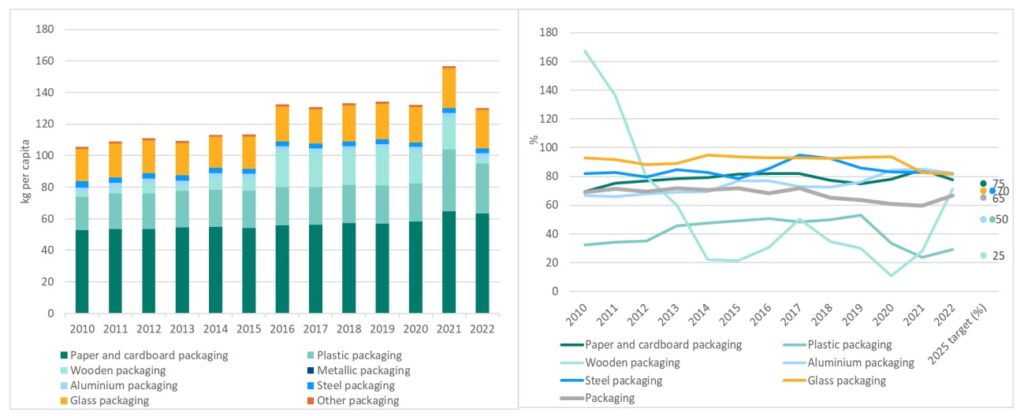
On the other hand, a report from March 2025 by the European Environment Agency points out that economic growth comes with increased waste production, even in Sweden.
The Swedish deposit system for cans and bottles is another major part of the recycling culture. Known locally as “pant,” the system places a refundable deposit on most aluminum cans and plastic bottles sold in stores. Consumers return empty containers to automated machines found in nearly every supermarket and receive a refund voucher that can be used for shopping or redeemed for cash. The machines are heavily integrated into daily life and are used by virtually all social groups. Families return large bags after weekends, students collect cans for extra money, and many homeless people gather discarded bottles as a source of income. Because containers have actual financial value attached to them, far fewer are thrown away in public spaces compared to countries without similar systems. The return rates are extremely high, often exceeding 85 to 90 percent depending on container type. Over time the system became culturally embedded rather than something people consciously think about.
Food waste handling is another area where Sweden developed highly advanced infrastructure. In many municipalities households separate food scraps into dedicated biodegradable bags that are collected separately from ordinary trash. Instead of ending up in landfills, this organic waste is processed into biogas through anaerobic digestion. The resulting gas is then used as fuel for buses, municipal vehicles, taxis, and other parts of public transport systems. In several Swedish cities buses partially operate on fuel generated from residents’ food waste. At the same time the leftover digestate from the process can be used as fertilizer in agriculture. This creates a cycle where household waste contributes both to transportation and food production. The system is particularly attractive in Sweden because many cities already invested heavily in centralized infrastructure and long-term environmental planning.
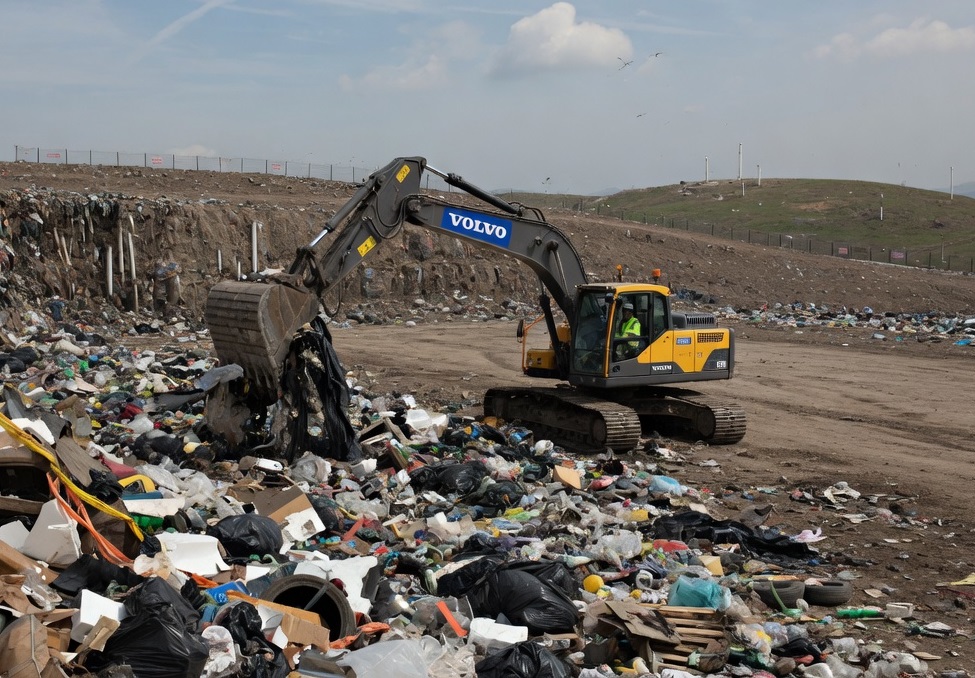
Sweden’s cold climate also played a major role in shaping its waste strategy. District heating systems are widespread throughout the country, especially in urban areas. Instead of every building relying on separate heating systems, centrally produced heat is distributed through underground pipe networks to homes, offices, schools, and businesses. Waste-to-energy incineration plants became closely connected to this system. Garbage that cannot be recycled economically is burned under controlled conditions to produce electricity and heating. The heat generated from waste combustion warms large parts of Swedish cities during winter. This means household trash literally contributes to heating apartments and providing hot water during the cold season. Modern facilities include advanced filtration systems designed to reduce emissions and capture pollutants, making them significantly cleaner than older incineration methods historically associated with heavy air pollution.
Sweden’s approach to recycling also reflects broader cultural traits that are noticeable in many parts of society. The country has unusually high levels of trust in institutions and relatively strong compliance with shared systems. Public transportation, tax systems, social welfare programs, and recycling infrastructure all depend partly on citizens following rules voluntarily. In countries where institutional trust is lower, recycling systems often struggle because contamination rates become high and public participation declines. In Sweden there is a stronger assumption that most people will participate correctly if the system is convenient and transparent. Social pressure reinforces this behavior quietly but effectively. A neighbor improperly sorting waste in a shared apartment recycling room will often receive comments or complaints from other residents.
Education also contributes significantly to the system’s success. Swedish schools introduce environmental topics and recycling habits early in childhood. Children often learn how to separate materials before they fully understand the larger environmental or political issues connected to climate change and sustainability. School cafeterias frequently include food waste sorting systems, reinforcing the behavior daily. Because recycling becomes normalized at such an early age, adults often continue the habits automatically without viewing them as unusual effort. This long-term cultural conditioning is one reason the system remains stable across generations.
Despite Sweden’s strong reputation, the system is not without criticism or debate. Some environmental groups argue that heavy reliance on waste incineration can discourage reductions in overall consumption and packaging waste. If waste becomes economically useful as fuel, there is less incentive to dramatically reduce the amount generated in the first place. Others point out that recycling rates for certain plastics still remain lower than many people assume because some materials are difficult or expensive to process effectively. Sweden also continues to consume large quantities of imported goods and packaging like other wealthy countries, meaning the country’s environmental footprint extends far beyond what is visible inside its borders. Nevertheless, compared to many industrialized nations, Sweden has built one of the most comprehensive and integrated waste management systems in the world.
Visitors are often struck by how clean Swedish cities and public spaces appear compared to many urban areas internationally. Public trash bins are common, littering rates are relatively low, and recycling stations are widely accessible. The infrastructure itself contributes to this impression because the system is designed to be visible and convenient rather than hidden away. Supermarkets, apartment complexes, schools, offices, and gas stations all integrate recycling into ordinary daily routines. The result is that recycling in Sweden rarely feels like a special environmental campaign. Instead it functions as part of the country’s basic infrastructure, similar to roads, electricity, or public transportation.
What makes Swedish recycling particularly interesting is not only the technology itself but the way it combines engineering, urban planning, culture, education, climate adaptation, and social norms into a single interconnected system. The country turned waste handling into an organized part of modern life rather than simply a municipal cleanup service. Garbage became connected to heating systems, public transportation, financial incentives, environmental education, and everyday social expectations. That combination explains why Sweden’s recycling model has attracted so much international attention and why many countries continue studying how parts of the system might be adapted elsewhere.