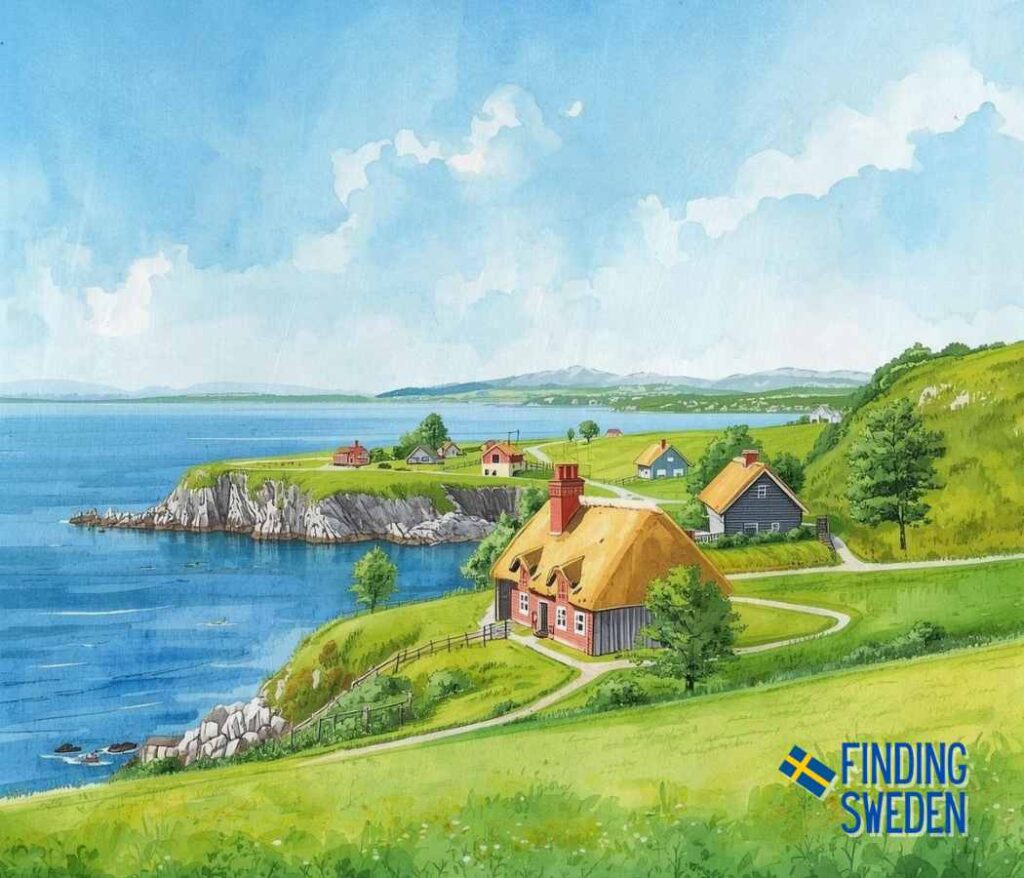
In the far southeast of Sweden, along the Baltic coast in Skåne, lies Österlen. On a map it looks modest. Rolling fields. Small fishing villages. A scattering of beaches. But Österlen has quietly built a reputation as one of Scandinavia’s most unexpected cultural landscapes.
Americans often associate Sweden with forests and Arctic drama. Österlen is different. Here the land opens wide under big skies, the light is softer, and creative life has taken root in a way that feels more Mediterranean than Nordic.
A rural region that became an art colony
What makes Österlen unique is not a single landmark but a long tradition of artists choosing to live here. Since the late 19th century painters and writers have been drawn to the region’s distinctive light, open horizons, and gentle coastline. The small village of Simrishamn and the fishing hamlet of Kivik became hubs for creative communities long before the term lifestyle destination existed.
Unlike curated art districts in major cities, Österlen’s creative culture is woven directly into the countryside. Studios sit beside wheat fields. Sculptures appear in old barns. Ceramic workshops occupy former farm buildings. Many artists open their studios to the public during seasonal events, turning entire villages into walkable gallery routes.
It is art without urban noise.
The light that changes everything
Locals talk about the light as if it were a living presence. The Baltic Sea reflects brightness differently than the west coast. Fields of rapeseed bloom electric yellow in late spring. In summer, golden grain stretches to the horizon. Even in autumn, the low angle of the sun gives long shadows and muted tones that photographers chase.
For travelers, this means slow mornings and long walks feel cinematic. A simple bike ride between villages can feel like moving through a painting.
A coastline of quiet beaches
Österlen’s beaches are another surprise. Near Stenshuvud National Park, sandy stretches meet wooded hills that rise unexpectedly from the coast. The park’s summit offers panoramic views over orchards and sea. On clear days the Baltic looks endless.
Further south, Sandhammaren is often described as having some of Sweden’s finest sand. Wide dunes and wind shaped grasses give it a wild, almost Atlantic feeling, despite being far from an ocean coast.
Unlike many European beach destinations, these shores remain understated. No towering hotel strips. No crowded boardwalks. Just sand, wind, and space.
Apples and slow food
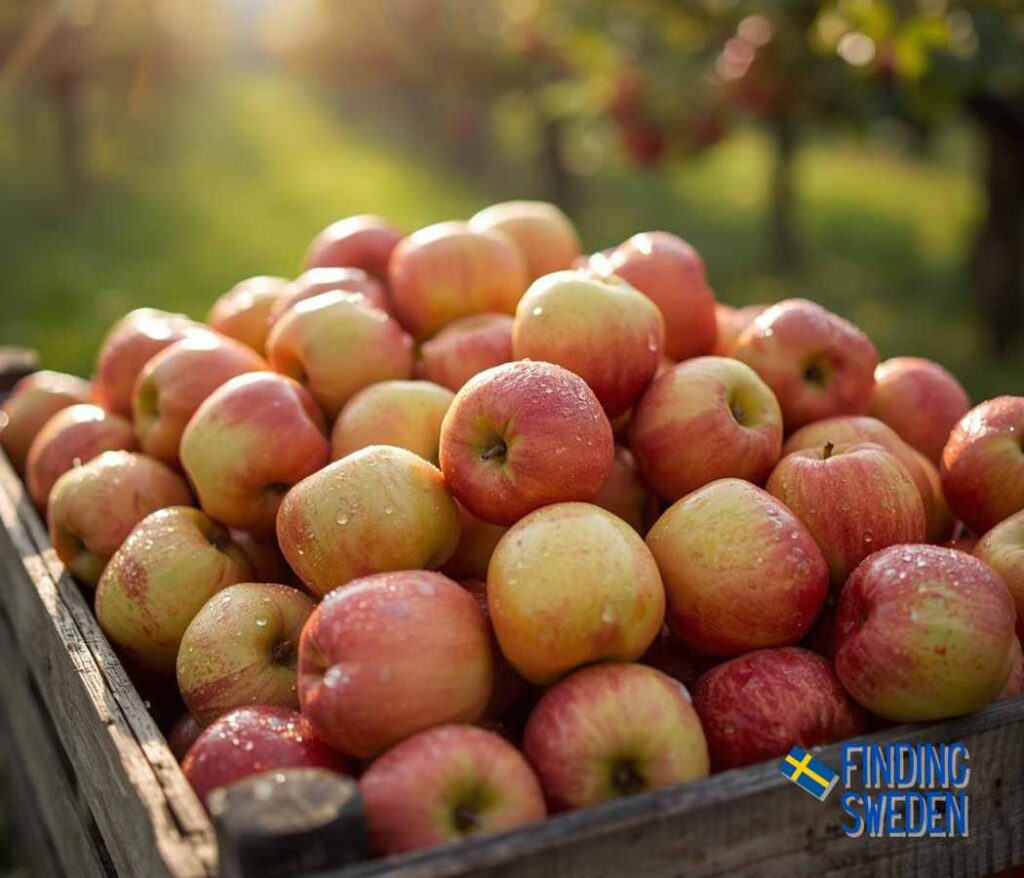
Apples from the orchards of Skåne
Another defining feature of Österlen is its orchard culture. Apple farms cluster around Kivik, and cider production has become both tradition and innovation. Seasonal harvest festivals celebrate fruit in ways that feel distinctly local rather than commercial.
Farm shops sell cheeses, smoked fish, fresh vegetables, and baked goods made from regional grain. Restaurants focus on seasonal ingredients sourced from nearby fields and waters. It is not flashy gastronomy. It is rooted, intentional cooking tied closely to the landscape.
For visitors, a day might mean cycling between orchards, stopping for lunch in a converted farmhouse café, then ending at the sea with wind in your hair.
Castles and quiet villages
Österlen also holds architectural gems tucked into the countryside. Glimmingehus stands as Scandinavia’s best preserved medieval fortress, its stone walls rising from flat farmland like something from a historical epic. The contrast between fortified architecture and soft surrounding fields makes the experience memorable.
Villages such as Simrishamn display pastel colored houses and cobbled streets that feel almost storybook in scale. Life moves slowly. Fishing boats still dock in small harbors. Even in summer, the mood rarely becomes frantic.
Why Österlen feels different
The uniqueness of Österlen lies in its balance. It is rural without being remote. Cultured without being urban. Coastal without being commercial. It attracts creatives, food lovers, cyclists, and hikers, yet retains a sense of quiet authenticity.
For american travelers expecting Nordic drama or metropolitan cool, Österlen offers something subtler. It invites you to notice the shape of fields against sky, the shift of light over water, the presence of art in everyday spaces.
It is not Sweden at its loudest. It is Sweden at its most quietly expressive.