The man beside me lowered his voice before saying what he thought about immigration.
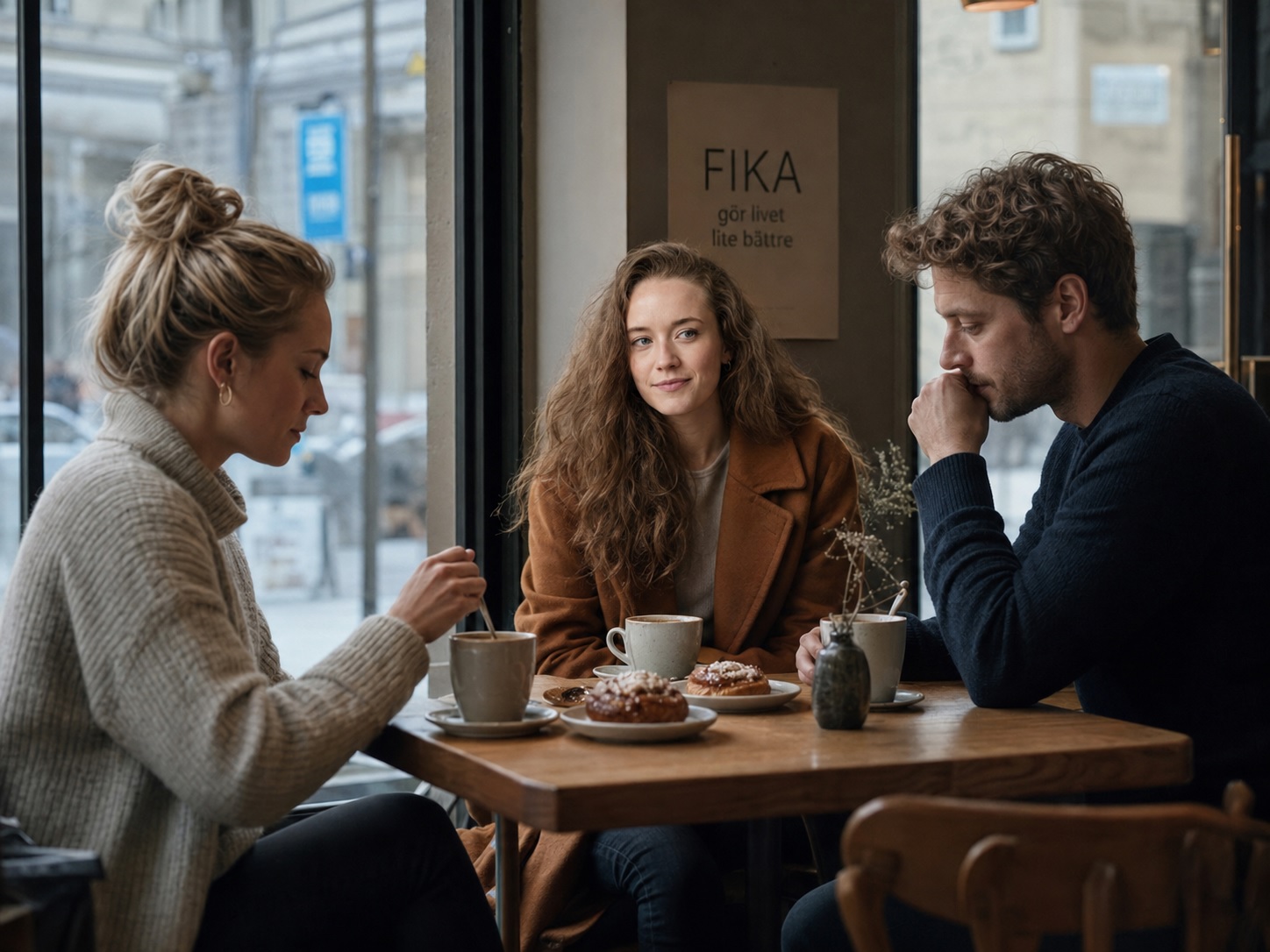
We were sitting in a café in Stockholm, although café may be too generous a word for a room with six tables, expensive filter coffee and the kind of lighting that makes everyone look slightly tired. He checked the tables around us, leaned closer and delivered an opinion that was neither shocking nor particularly unusual.
Then he spent the next five minutes explaining that he did not think he was better than anyone else.
This felt more Swedish than the opinion itself.
From outside, Sweden appears to be splitting into two countries. One is the Sweden many foreigners recognise: progressive, environmentally conscious, generous, peaceful and quietly convinced that most social problems can be solved by a committee. The other is harder, more suspicious and more concerned with borders, crime, punishment and military strength.
International headlines suggest that the second Sweden is replacing the first.
Walking through the country, it does not always feel that way.
There are real reasons to believe Sweden is changing.
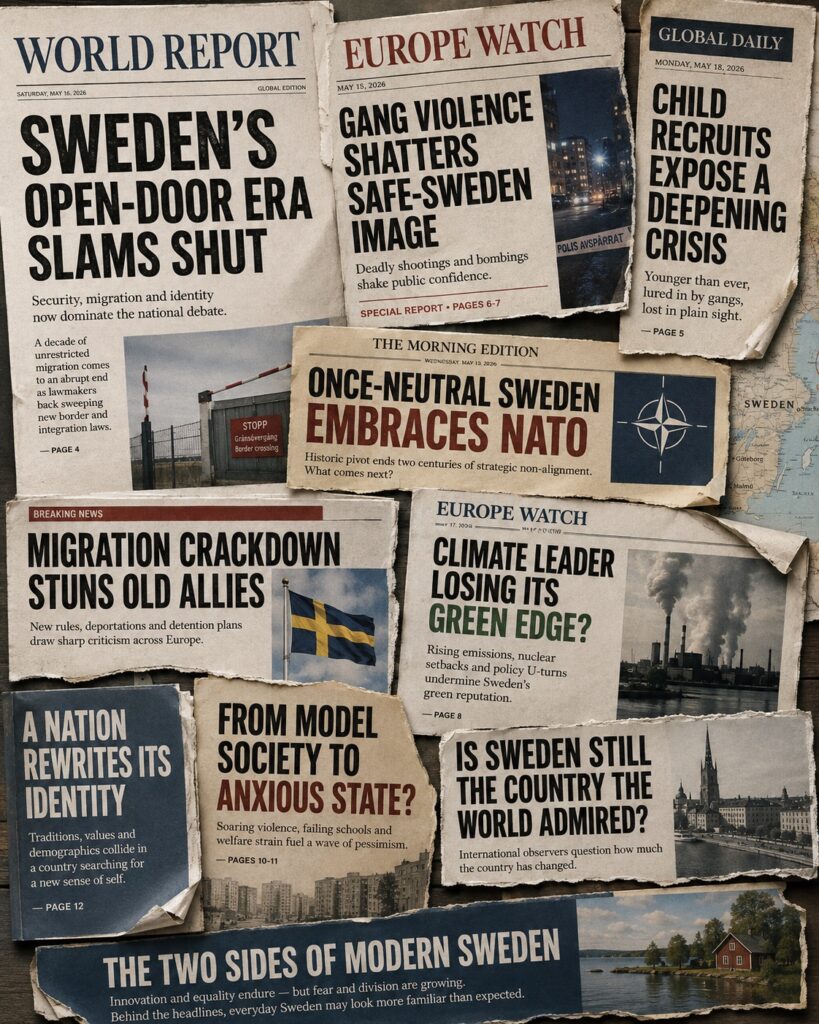
Migration policy has become considerably stricter. The number of asylum applications has fallen to levels not seen for decades, while the government has introduced tougher conditions for residence and citizenship. Policies that would once have seemed politically impossible are now debated as practical administration.
Sweden has also abandoned more than two centuries of military nonalignment and joined Nato. It is increasing defence spending, rebuilding civil preparedness and sending substantial military support to Ukraine. The country that once tried to stand between political blocs now presents itself as a committed member of the Western alliance.
Crime has changed the national conversation too. Shootings, explosions and the recruitment of children by criminal networks have damaged the idea that Sweden is unusually protected from the violence found elsewhere. Even when shootings decline, the subject remains present in political speeches, newspaper alerts and private conversations.
The international story is easy to construct. The open country closed its borders. The neutral country joined a military alliance. The safe country discovered organised violence. The climate leader weakened its environmental policies.
Each statement contains some truth.
Together, they can create a Sweden that is difficult to recognise from an ordinary Swedish kitchen.
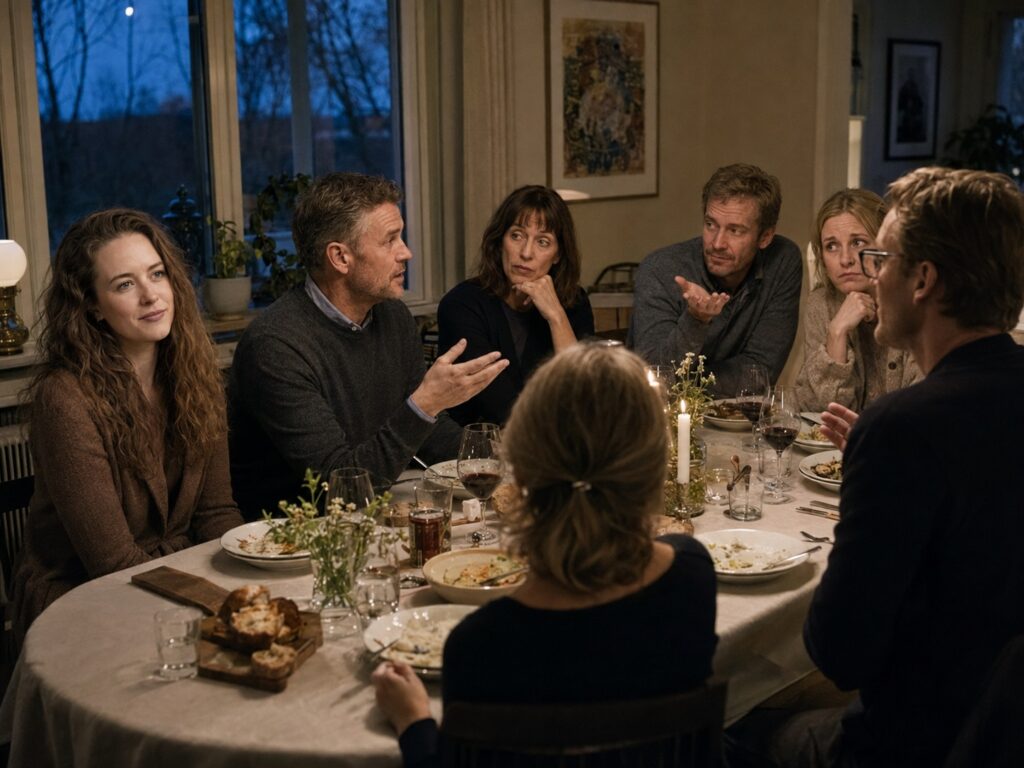
At a dinner outside Uppsala, I listened as six people discussed politics without appearing to disagree.
This required considerable skill.
One person criticised the government. Another said the previous government had been no better. Someone mentioned crime, then immediately added that most neighbourhoods were still safe. A woman at the end of the table said immigration had been badly managed but looked uncomfortable when another guest agreed too enthusiastically.
Nobody raised their voice. Nobody claimed to have the answer. Every strong statement arrived wrapped in qualifications.
The country may have become more politically divided, but Swedes still appear deeply committed to avoiding the appearance of division.
Jantelagen remains useful here. It is usually translated as the idea that you should not believe you are better, wiser or more important than other people. Swedes often insist that the concept is outdated, exaggerated or more Danish than Swedish.
Then someone expresses a confident opinion and immediately apologises for taking up too much space.
Jantelagen does not prevent disagreement. It changes how disagreement is performed. Political conflict is softened by restraint, self criticism and an almost physical discomfort with certainty. Even people with strong opinions often present themselves as reluctant witnesses rather than leaders of a movement.
This may be one reason Sweden looks more divided in headlines than it feels in person. The political positions have moved. The social choreography has not.
Climate never disappeared
Climate policy provides another example.
From abroad, Sweden appears to have stepped back from its environmental identity. The Swedish Climate Policy Council concluded in its 2026 report that current policies are insufficient to reach several national climate targets. It also noted that all parties in parliament continue to support Sweden’s long term climate goals, even as they disagree about the measures needed to reach them.
That gap matters. Political action has weakened in some areas. Public concern has not disappeared with it.
A Novus survey conducted in February 2026 found that two thirds of Swedes were worried about climate change. Six in ten said it was important to reduce their own climate footprint. Those figures were relatively stable rather than rapidly increasing, but stability is precisely the point. Climate concern has become less like a campaign and more like part of the furniture.
You notice this when you speak to people.
They may complain about fuel prices, electricity bills or environmental rules that appear designed by someone who has never needed to drive through northern Sweden in February. They may support nuclear power, wind power, both or neither. They often distrust the politicians responsible for the transition.
But the basic idea that climate change matters is rarely treated as strange.
At another dinner, a man spent several minutes criticising climate policy before explaining the solar panels on his roof, the heat pump in his garage and why he had stopped flying to meetings in Stockholm.
He did not describe himself as an environmentalist.
That would have sounded boastful.
Agreement beneath the argument
Swedish politics has changed partly because Swedes agree about more than the arguments suggest.
Almost everyone says integration should work better. Almost everyone wants lower crime. Almost everyone believes the welfare state should remain strong. Even debates about migration are often arguments about how to preserve Swedish institutions rather than whether those institutions should exist.
The disagreement concerns who should be included, what should be demanded of them and how much pressure the system can withstand.
This is not a small disagreement. It affects real lives and has produced policies that would have been difficult to imagine fifteen years ago. But it is different from a complete collapse of the old social consensus.
Institutional trust remains an important part of Swedish society, even when confidence varies between institutions and political groups. The OECD’s 2026 work on trust in Sweden continues to treat reliability, fairness, openness and everyday contact with public institutions as central to understanding the country.
Swedes complain about authorities constantly. They also expect those authorities to function, publish the rules, answer the telephone eventually and send a decision in writing.
The anger often comes from disappointed trust, not from the absence of it.
Sweden did not become two countries
The idea of two Swedens is tempting because it turns a complicated country into a clean story.
There is the tolerant Sweden and the nationalist Sweden. The green Sweden and the industrial Sweden. The peaceful Sweden and the armed Sweden. The successful Sweden and the frightened Sweden.
In reality, the same person can belong to both sides before breakfast.
A voter may support stricter migration rules and oppose the deportation of a colleague. Someone may want harsher punishments and still believe deeply in rehabilitation. A person may criticise climate regulation while sorting every piece of household waste with the concentration of a laboratory technician.
These are not necessarily signs of hypocrisy. They are signs that national identities do not change as neatly as governments do.
Sweden has become less certain about the stories it once told about itself. That uncertainty is real. The policies are real. The people affected by them cannot be dismissed as part of a media narrative.
But beneath the new arguments, much of the old Sweden remains.
People still avoid sitting beside strangers on the bus unless every other seat is occupied. They still remove their shoes without being asked. They still distrust anyone who presents personal success without an apology. They still become animated about forests, recycling, public access to nature and whether the municipality has chosen the wrong kind of bin.
When I left the café, the man who had whispered his political opinion held the door for me, stepped aside and apologised because we had both tried to leave at the same time.
For a moment, neither of us moved.