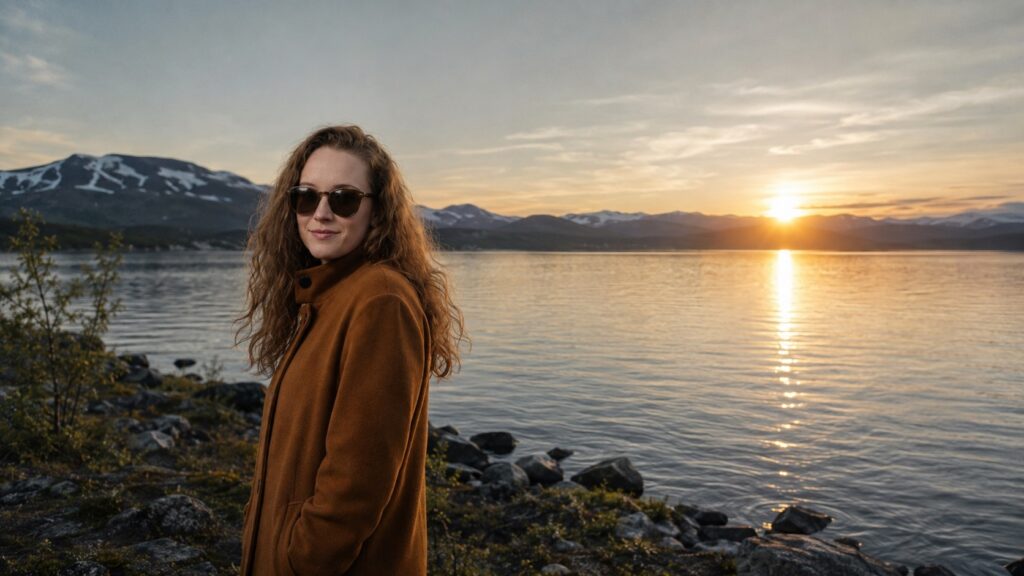
At half past midnight in Abisko, I was standing beside a lake wearing sunglasses.
This felt wrong in several ways. My body wanted darkness, the mountains were still glowing, and a group of hikers nearby had begun preparing coffee as though it were a perfectly reasonable time to start the day. Nobody appeared tired. Nobody was going home. The sun simply hovered above the horizon, refusing to perform the one task I had always assumed was non negotiable.
The midnight sun is usually described as a natural phenomenon. That is accurate, but incomplete. It is also a small assault on your sense of time.
Above the Arctic Circle, the summer sun remains above the horizon throughout the night. In northern Sweden, the exact period depends on how far north you travel. Abisko usually has midnight sun from around 25 May until 18 July, while Kiruna experiences it from late May until the middle of July. Farther south, the period becomes shorter.
Abisko
Abisko is the obvious answer, which does not make it the wrong one.
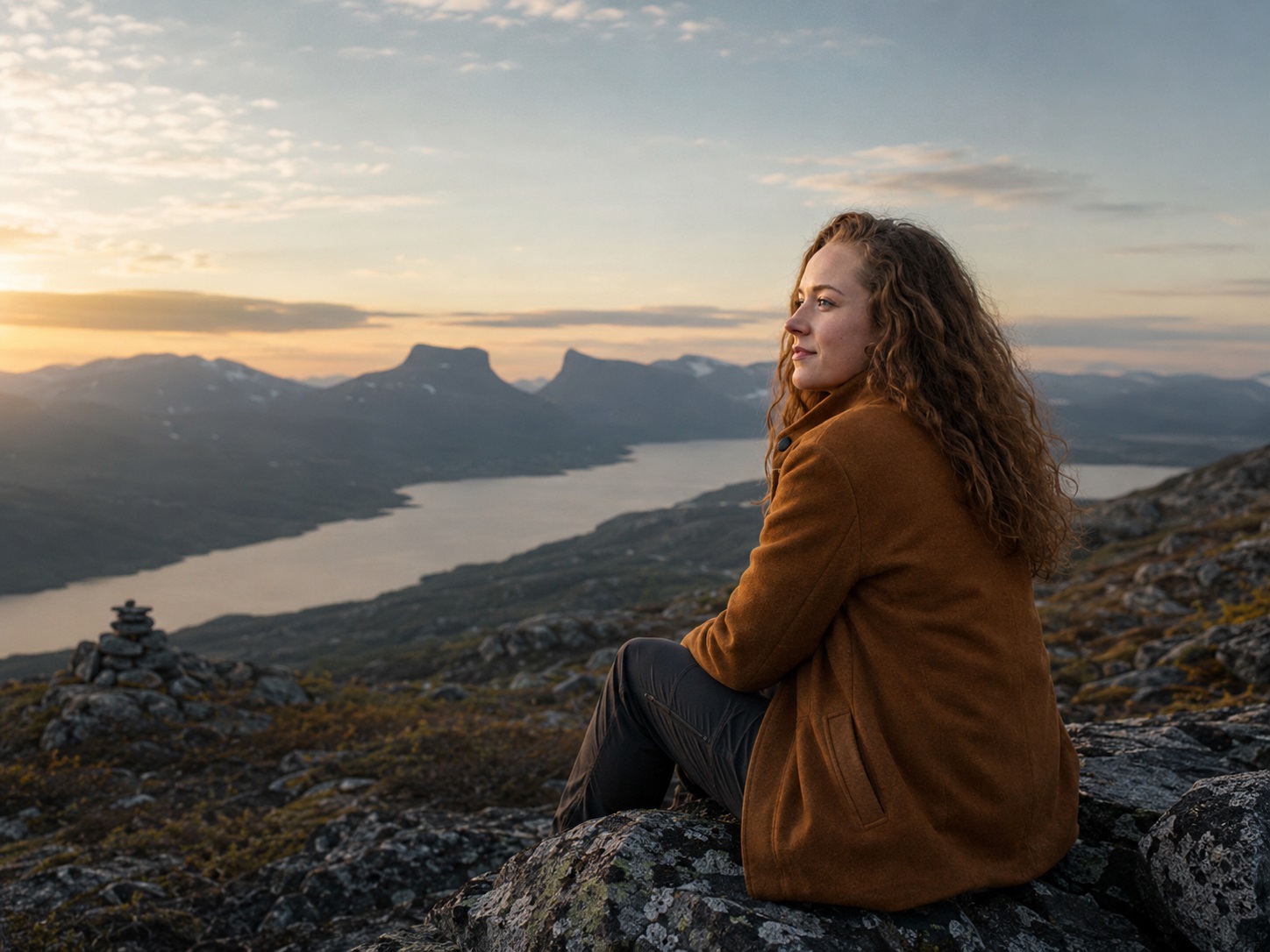
The national park sits between mountains and the enormous lake Torneträsk. At midnight, the light slides across the water and catches the last patches of snow on the surrounding slopes. Nothing dramatic needs to happen. The landscape already understands theatre.
The best known viewpoint is on Njullá, also called Nuolja, above Aurora Sky Station. A chairlift carries visitors part of the way up, and from the mountain you can look across Torneträsk, Abisko valley and the distinctive U shaped outline of Čuonjávággi, often called Lapporten in Swedish. Guided midnight walks continue towards the summit, 1,164 metres above sea level.
This is probably the best choice for a first encounter with the midnight sun. The view is enormous, the route is accessible compared with a longer mountain expedition, and Abisko has enough tourist infrastructure to prevent the experience from becoming an accidental survival exercise.
It still feels wild. Just conveniently wild.
Bring warm clothing even when the day has been pleasant. The light may suggest late afternoon, but the air remembers that you are in the mountains at midnight.
Riksgränsen
Riksgränsen offers one of the stranger versions of the Swedish summer.
Here, close to the Norwegian border, you may be able to ski beneath the midnight sun around Midsummer if snow conditions allow. The combination is difficult to process. Summer flowers appear beside the road while people carry skis towards slopes that remain bright late into the night.
Even without skiing, the area is worth visiting for the mountain scenery. The sun stays low enough to stretch shadows across the slopes, turning every ridge and patch of snow into part of the composition.
Riksgränsen feels less gentle than Abisko. The mountains are closer, the weather changes quickly and the whole place has the slightly improvised character of a settlement built because people wanted to be somewhere they probably should not.
That makes the light more interesting.
Kiruna
Kiruna is where the midnight sun collides with ordinary life.
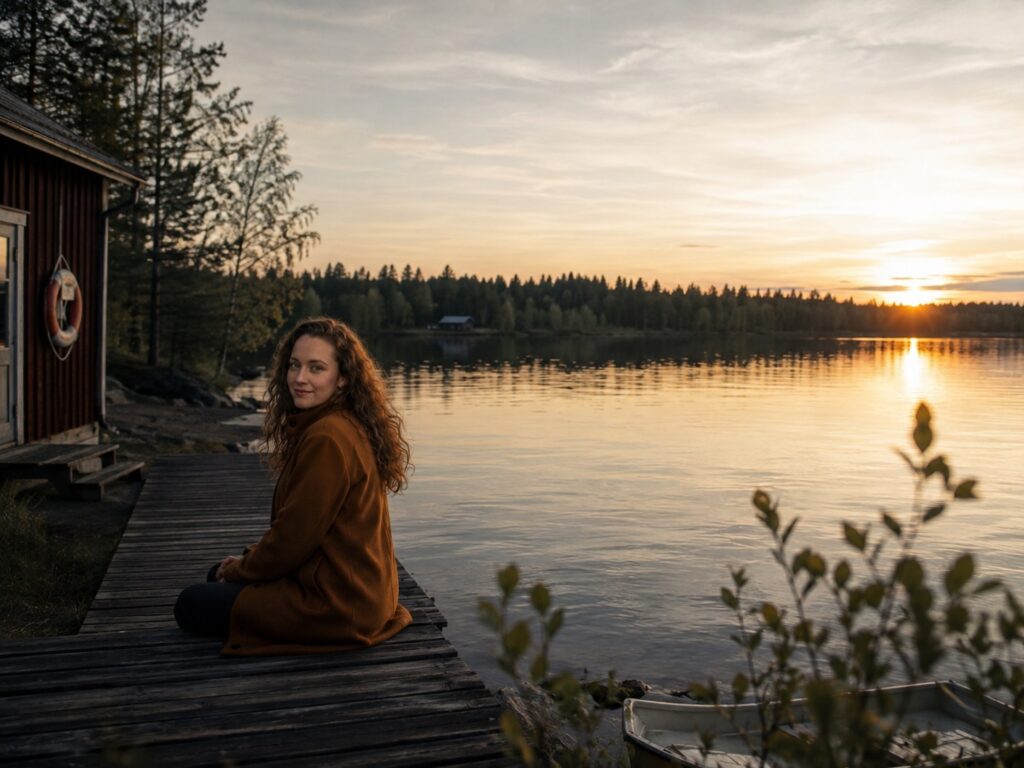
You can watch it from the surrounding hills, beside a lake or along the city’s Midnight Sun Trail. Then you can return to streets where people are walking dogs, driving home or buying something from a petrol station under a sky that looks like early evening.
Kiruna has about 47 consecutive days when the sun remains above the horizon. The wider period of bright nights lasts much longer, sometimes described locally as roughly 100 days without real night.
The city is a practical base for exploring a much larger area. From here you can travel towards Abisko, Riksgränsen, Jukkasjärvi or the mountains around Kebnekaise. You can also stay near town and find a quieter place beside the water.
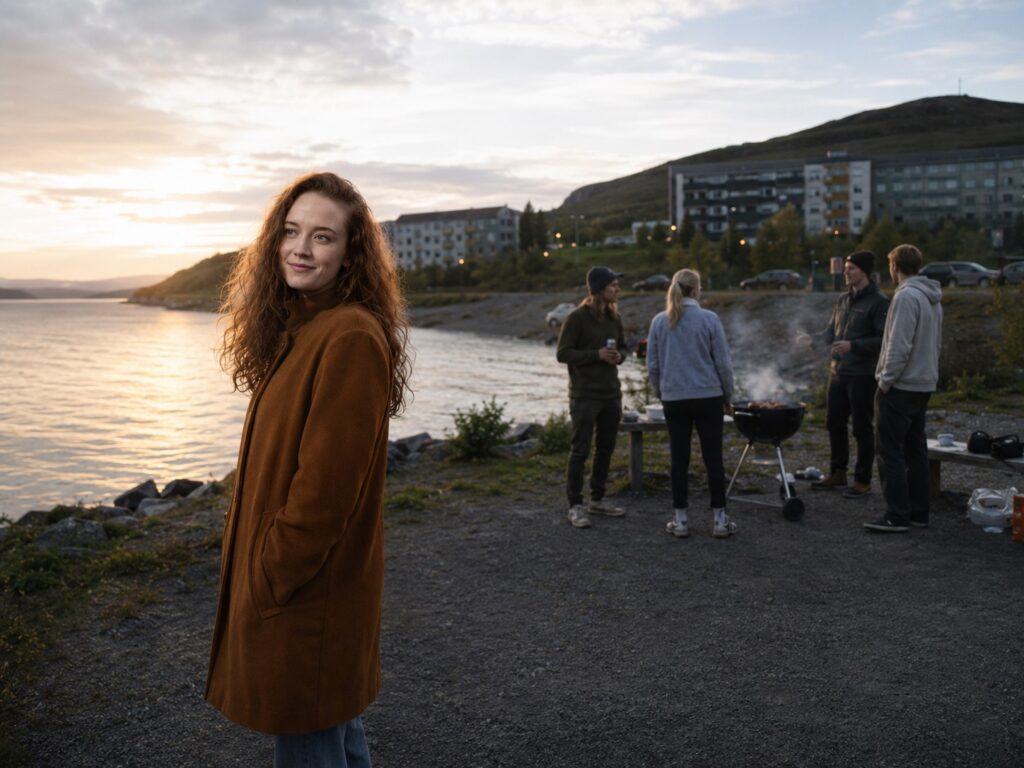
That may be the better experience. The midnight sun does not always need a summit. Sometimes it is more peculiar to see it reflecting in a lake while someone nearby is calmly cooking sausages at one in the morning.
Kebnekaise
Kebnekaise demands more from you.
Sweden’s highest mountain lies west of Kiruna, surrounded by broad valleys, rivers and high peaks. Reaching the mountain station normally involves a journey to Nikkaluokta followed by a hike or seasonal boat connection combined with walking. This is not the place to choose when you want to step off a coach, take a photograph and return to dinner.
It is the place to choose when you want the light to become part of a journey.
During summer, the long daylight allows hikers to move without the usual pressure of sunset. There is something liberating about that, but also deceptive. Your body may feel energetic simply because the landscape remains bright. The clock can say eleven while the light insists it is five.
The most beautiful view may not be from the summit. It may come lower down, where the sun catches the river and the mountains darken into layers behind it. A small person in a very large valley is one of the most honest ways to experience northern Sweden.
Jokkmokk
Jokkmokk offers a different kind of encounter.
The town lies just north of the Arctic Circle and has a shorter midnight sun period than Abisko or Kiruna, generally lasting from early June into early July.
The landscape here is softer. Forests, rivers and lakes replace some of the severe mountain drama found farther north. This makes Jokkmokk a good choice for travellers who want to combine the midnight sun with an understanding of the region rather than treating the light as an isolated spectacle.
Jokkmokk is an important centre for Sámi culture and home to Ájtte, the Swedish Mountain and Sámi Museum. The surrounding region is part of Sápmi, the traditional homeland of the Sámi people, whose relationship with these landscapes stretches back thousands of years.
That context matters. Northern Sweden is often marketed as empty wilderness, but it is neither empty nor untouched. People have travelled through, worked in and understood this land for generations.
The sun may be the reason you arrive. Jokkmokk gives you reasons to look below the horizon.
Gällivare
Gällivare rarely receives the same attention as Abisko, which is part of its appeal.
The town sits among forests, lakes and low mountains, with the fell Dundret rising immediately outside it. From its upper slopes, you can look across a wide landscape under continuous summer light. The midnight sun generally lasts here from the beginning of June until around 10 July.
Dundret is accessible enough to make a late evening excursion possible without organising a full expedition. That matters when the weather is uncertain. You can wait, watch the clouds and head upwards when the sky begins to clear.
Gällivare feels less like a destination arranged around visitors. Mining, roads and ordinary residential areas remain visible beside the surrounding nature. This does not ruin the experience. It gives it scale.
The midnight sun becomes more peculiar when it shines over apartment blocks, industrial buildings and a mountain at the same time.
When to travel
The safest period for planning a midnight sun trip is June.
Around the summer solstice on 21 June, the sun reaches its highest seasonal position, and every destination north of the Arctic Circle has extremely long daylight. Abisko and Kiruna offer a wider window, beginning in late May and continuing into the middle of July. Jokkmokk and Gällivare have shorter periods.
The sun being above the horizon does not guarantee that you will see it. Clouds remain clouds, even in the Arctic. Build some flexibility into the journey rather than scheduling one precise midnight appointment with the sky.
You should also bring an eye mask. Adjusting to constant daylight can take several days. This initially sounded overly cautious to me. Then I found myself awake at three in the morning, completely alert, wondering whether breakfast was an activity or merely a convention.
The most spectacular place is Abisko. The strangest may be Riksgränsen. Kebnekaise offers the greatest sense of distance, while Jokkmokk gives the light more cultural depth.
But the moment I remember most happened beside that lake.
The hikers finished their coffee and walked away. The water barely moved. Somewhere behind me, a bird continued singing with the confidence of an animal that had never agreed to bedtime. The sun touched the mountain but did not disappear.