
There is a moment many people experience shortly after arriving in Sweden when the country stops feeling effortlessly modern and starts feeling strangely inaccessible. It often comes as a surprise. Sweden has a global reputation for efficiency, digital services, and smooth administration, and much of that reputation is deserved. But what is less visible from the outside is that this efficiency is built around a single gateway, a number that determines whether you are inside the system or still standing just outside it. That number is issued by Skatteverket, and until you have it, daily life can feel unexpectedly complicated.
The personal number, or personnummer, is not simply an identification tool in the way many countries use national ID systems. In Sweden, it functions more like a master key. It connects you to healthcare, banking, employment, taxation, insurance, subscriptions, and digital services. It is the backbone of a society where almost everything is integrated and automated. Once you have it, systems speak to each other seamlessly. Without it, they often do not speak to you at all.
For someone arriving from abroad, the first encounter with this reality is rarely dramatic. It begins with small frictions. You try to open a bank account and are told to come back later. You attempt to sign up for a mobile phone plan and are offered only limited prepaid options. You realize that paying bills, receiving a salary, or even identifying yourself in certain contexts is more difficult than expected. None of these issues are insurmountable on their own, but together they create a sense of being temporarily disconnected from the structure that makes the country function so smoothly for everyone else.
The reason for this lies in how the system is designed. Sweden assumes that people within it are registered, traceable, and permanent enough to justify inclusion in a highly coordinated administrative framework. To receive a personal number, you must demonstrate that you intend to live in the country for an extended period, typically at least a year, and that your presence has a clear basis such as employment, studies, or family connection. This requirement is logical from a governance perspective, but it introduces a delay that becomes a bottleneck for newcomers.
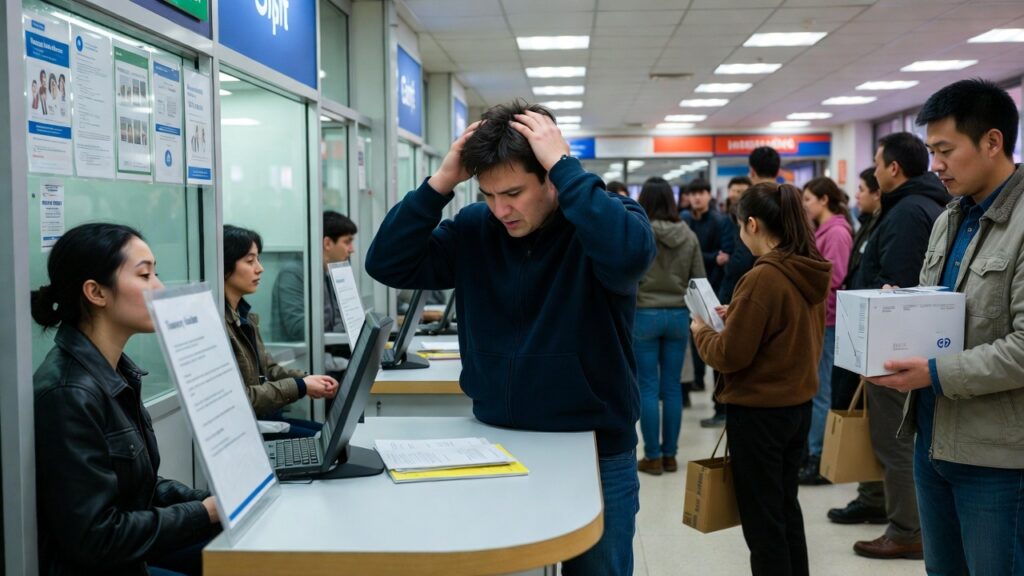
Sweden can be complicated without it
The waiting period is not always long, but it is unpredictable enough to create uncertainty. For some, it takes a few weeks. For others, it stretches into months. During that time, the absence of a personal number has ripple effects that extend far beyond paperwork. Sweden is one of the most cashless societies in the world, which means that access to digital payments is not a convenience but a necessity. Without a fully functional bank account, everyday transactions become awkward. Employers may hesitate to process salaries in standard ways. Even when work is secured, administrative details can slow down onboarding in ways that feel disproportionate to the simplicity of the underlying task.
There is also a structural paradox that many encounter. Securing a personal number is easier if you have stable employment, yet entering the job market can be harder without the number itself. Employers are not always unwilling to hire without it, but the additional complexity can make them cautious. This creates a circular situation where progress in one area depends on progress in another, and neither moves as quickly as one would hope. It is not a deliberate barrier, but it functions as one in practice.
Healthcare provides another example of how deeply integrated the system is. Sweden’s healthcare is accessible even without a personal number, but the experience is different. Instead of being fully embedded in the system with automatic records, bookings, and standard fees, interactions can become more manual. Identification requires additional steps, costs may differ, and the overall process feels less streamlined. It is a subtle shift, but one that reinforces the sense of being outside the core structure.
What makes this situation particularly striking is how sharply it contrasts with what happens once the personal number is finally issued. The change is often immediate. With the number in place, it becomes possible to obtain a digital ID, open bank accounts without restriction, sign contracts electronically, and interact with both public and private services in the way the system was designed to function. Tasks that previously required multiple steps suddenly take seconds. The same society that felt slow and fragmented reveals itself as highly efficient, almost frictionless.
This transition is why many describe the experience not as a simple delay, but as a bottleneck. It is a single point through which access to nearly all aspects of daily life must pass. Before that point, progress is uneven and sometimes frustrating. After it, everything accelerates. The difference is not gradual. It is binary.
For those preparing to move to Sweden, understanding this dynamic in advance can change the experience significantly. The most effective approach is to arrive with as much clarity and documentation as possible regarding the purpose and duration of your stay. Employment contracts, admission to educational programs, or proof of family ties all strengthen the application process. Applying early and ensuring that all required information is complete can reduce the risk of delays, although it cannot eliminate them entirely.
At the same time, it is wise to plan for an interim period where certain systems are not fully accessible. Temporary solutions exist, even if they are less convenient. Prepaid mobile services, limited banking options, and workarounds through employers can bridge the gap. More importantly, adjusting expectations can make the process less frustrating. The friction is not a sign that something is wrong, but a reflection of how tightly integrated the system becomes once access is granted.
There is a certain logic to the design. Sweden has built a society where administrative simplicity on the surface depends on a strong underlying structure. The personal number is a central part of that structure, ensuring that services can be delivered efficiently and consistently. For those already inside the system, the result is a level of convenience that is difficult to match. For those entering it, the initial delay can feel disproportionate, but it is also temporary.
In the end, the experience of the personal number bottleneck says as much about Sweden’s strengths as it does about its challenges. The same mechanism that creates friction at the beginning is what allows everything else to function so smoothly afterward. Once the number is in place, the country often lives up to its reputation. Until then, it asks for patience, preparation, and a willingness to navigate a system that only fully reveals its efficiency once you are part of it.