
Offentlighetsprincipen is one of those Swedish institutions that is so old, so embedded, and so practical that it can disappear into the wallpaper. Swedes speak about it as if it were simply part of the natural order, but in comparative terms it is anything but ordinary. At its core, the principle means that the public has a right to inspect official documents held by public authorities. In modern Swedish law, that right sits in the Freedom of the Press Act, one of the country’s four fundamental laws, while the detailed limits and exemptions are set out in the Public Access to Information and Secrecy Act. The system is broader than many outsiders realize. It is not just about journalists obtaining dramatic revelations from ministries. It also covers the ordinary paperwork of government, the citizen’s ability to ask what an authority has received or produced, the right to attend court hearings and many political assemblies, and protections for officials who provide information for publication. In Sweden’s own legal description, the principle is not a single narrow rule but a cluster of transparency rights that together define what an open state is supposed to look like.
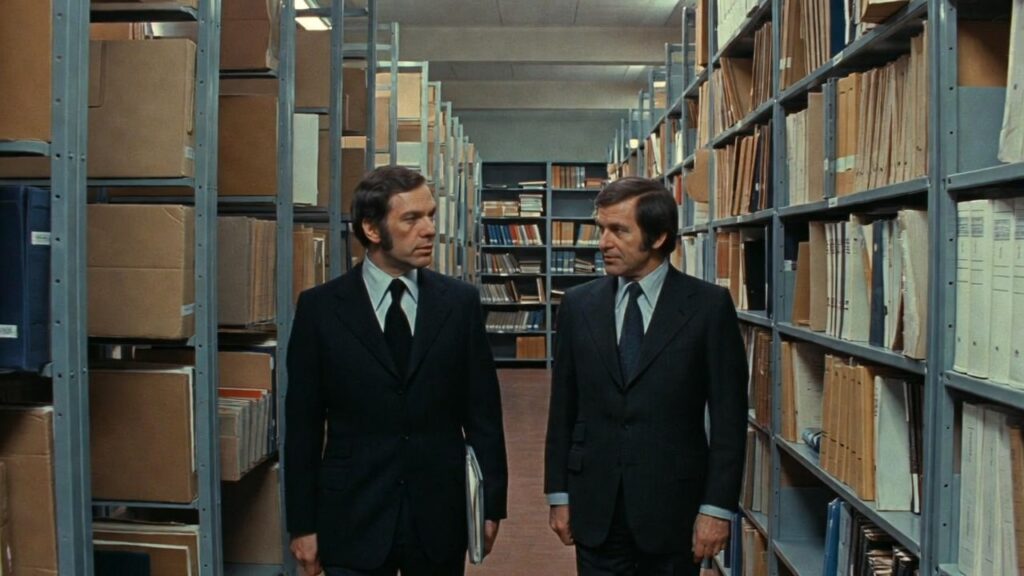
Government documents are open by default, giving citizens the right to see how power is used and hold it accountable
What makes the Swedish case historically remarkable is not simply that it values openness, but how early it did so. The roots go back to the Freedom of the Press Ordinance of 1766, adopted on 2 December of that year, when Sweden still included Finland. UNESCO describes that law as the world’s first legislation guaranteeing free communication of information, and Swedish parliamentary material places offentlighetsprincipen directly in that constitutional breakthrough. The 1766 settlement did two things at once. It weakened prior censorship and it opened official records to scrutiny. That pairing matters. In the Swedish tradition, freedom of expression and access to official information were never entirely separate ideas. Openness was not treated merely as an administrative convenience but as part of the constitutional architecture of liberty. The premise was that public debate would be shallow and power insufficiently checked if citizens could not see what the state was actually doing.
The story was not a straight march toward ever greater transparency. The original 1766 framework did not remain intact for long. A later official Swedish inquiry notes that the principle introduced in 1766 was effectively curtailed after only six years, and that by 1774 the king could decide which archival records would be released, while criticism of the king and officials was again restricted. The basic principles of press freedom and public access were then re established after the constitutional settlement of 1809. The Constitution of Sweden explains that the 1809 order restored the core elements of press freedom, including freedom from prior censorship and the principle of public access to official documents. That arc matters because it reveals something important about Swedish openness. It was never simply a matter of national temperament. It was fought over, reduced, restored, and gradually stabilized through constitutional design. What feels today like a calm administrative norm was historically a contested answer to a raw political question: should rulers be observed by the ruled, or should they operate behind walls.
As long as national security doesn’t demand it, the conversation is public
In its present form, offentlighetsprincipen works through a deceptively simple legal idea. Documents submitted to an authority or drawn up by it can become official documents, and official documents are in principle accessible unless a specific secrecy rule applies. The Public Access to Information and Secrecy Act is the gatekeeper for those exceptions. Swedish government guidance stresses that restrictions must be carefully specified in law, not invented ad hoc by agencies. It also makes clear that even where some information in a document is secret, the rest should still normally be disclosed. In other words, secrecy is supposed to be carved out from openness, not the other way around. This default matters more than it might seem. In many systems around the world, public access exists formally but officials still act as if the file belongs to the state unless the citizen proves a strong reason to see it. In Sweden, the underlying logic is reversed. The document is presumptively available because public business is presumed to belong, in a constitutional sense, to the public.
One of the most distinctive practical consequences is that the requester usually does not need to explain who they are or why they want the material. The Government Offices state this plainly: when asking for access to an official document, you do not need to reveal your name or the reason for your request unless that becomes necessary to assess whether secrecy applies. That is a striking rule. It lowers the psychological threshold for scrutiny and reduces the state’s ability to sort “good” requesters from troublesome ones. A reporter, competitor, activist, curious neighbor, researcher, or ordinary citizen approaches the file from the same starting position. The right is attached to the public, not to a licensed professional class. That has had obvious consequences for Swedish journalism, which has long been able to work with a degree of documentary access that many foreign reporters would regard as enviable. But the deeper effect is cultural. It teaches both officials and citizens that scrutiny is normal. Requesting records is not treated as suspicious behavior. It is treated as part of citizenship.

Offentlighetsprincipen means a very strong protection for journalists, that don’t have to state any reason or even their name when demanding documents from the government
This broad access has shaped Swedish society in ways that are both visible and subtle. The obvious effect is accountability. Journalists, opposition politicians, unions, watchdogs, researchers, and private citizens can examine decisions, correspondence, registries, and records that would be much harder to access in more secretive systems. The less obvious effect is anticipatory. When decision makers know that drafts, emails, incoming documents, and final records may eventually be seen, they act under an expectation of visibility. That can improve discipline, record keeping, and legal caution. It can also make the state feel less mystical. Decisions are still powerful, but they are not meant to be opaque. The Swedish legal framework explicitly ties openness to transparency in public sector activities, and OECD assessments continue to place Sweden among the stronger trust and transparency environments in the democratic world. In 2023, according to OECD country data published in 2025, 43 percent of people in Sweden reported high or moderately high trust in the national government, above the OECD average, while satisfaction with administrative services was also above average. It would be simplistic to say offentlighetsprincipen alone created that trust, but it is reasonable to see it as one of the constitutional habits that help sustain it.
There is also a profound equalizing effect in the Swedish model. Because records are formally accessible to everyone, information is less easily monopolized by insiders. In theory at least, the same planning document, email trail, procurement material, or policy memorandum can be reviewed by a major newspaper, a local activist group, or a private individual with no institutional backing. That does not eliminate inequalities of time, skill, or legal knowledge, but it narrows them. It also reinforces a specifically Swedish suspicion of arbitrary authority. The public authority is not meant to possess information in the way a private actor possesses a trade secret. It holds information on behalf of a society that has reserved for itself a continuing right of inspection. This is one reason the principle has become larger than a legal doctrine. It signals that democratic control is not confined to election day. It runs through the filing cabinet, the registry, the diary entry, and the archived email.
It can create a lot of work for certain government institutions, as they Have to deliver the documents in a speedy manner
Yet the same openness that strengthens accountability can create friction with privacy, data protection, and administrative efficiency. Swedish authorities and ombudsmen repeatedly stress that offentlighetsprincipen is limited by secrecy rules designed to protect national security, law enforcement, commercial confidentiality, and personal integrity. The modern Swedish state is therefore constantly balancing two constitutional instincts that do not always fit neatly together: the instinct that public business should be visible, and the instinct that sensitive personal information should not be casually exposed. This tension has become sharper in the digital era, because searchable databases, email systems, and large scale digital storage make disclosure both easier and more consequential. The legal structure still begins from openness, but the social meaning of release has changed. A paper record once viewed in an archive is not the same thing as a digital file that can be copied, indexed, and spread instantly. The Swedish model has had to adapt, but it has not abandoned its original bias toward visibility.
Another important effect is institutional. The Public Access to Information and Secrecy Act does not just regulate ministries and classic state agencies. Swedish government guidance notes that municipal enterprises and certain private law bodies can also be required to apply the principle of public access, and some private bodies are brought in when they perform administrative functions or appear in the Act’s appendix. That matters in a modern governance landscape where public tasks are often performed through companies, contractors, and hybrid entities. Sweden has at least tried, through legislation, to prevent transparency from evaporating simply because a public function is organizationally displaced. This is not absolute and it does not solve every problem, but it reflects a serious effort to attach openness to public power rather than only to the old bureaucratic form of the state.
At the same time, Sweden’s transparency culture should not be romanticized as seamless. The principle is strong, but its enforcement depends on administrative habits, resources, and legal discipline. Recent decisions from the Parliamentary Ombudsmen show that authorities still fail to handle document requests with the urgency the law requires. In late 2024 and 2025, the Ombudsmen criticized Region Västerbotten, Bollnäs Municipality, the National Board of Institutional Care, and even the Government Offices for slow or deficient handling of disclosure requests. These decisions are significant not because they prove the principle is weak, but because they show what a mature transparency system looks like in practice. The failure is visible, challengeable, and publicly criticized by constitutional watchdogs. In a less open system the same delay might simply disappear into administrative darkness. In Sweden it becomes, itself, an official matter.
For a long time Sweden was completely unique in this
Is Sweden unique? Historically, yes. In the specific sense that it embedded public access to official records in constitutional legislation in 1766, Sweden occupies a singular place in the history of transparency law. UNESCO and comparative legal surveys both identify Sweden as the earliest case. But in the contemporary world, Sweden is no longer alone. Finland is the closest relative, for obvious historical reasons. The Finnish Ministry of Justice states that under Finland’s Act on the Openness of Government Activities everyone has the right to obtain information from official documents in the public domain, and the Finnish act begins from the same core presumption that official documents are public unless specifically restricted by law. Norway has a statutory right of access to documents held by public authorities, with the law’s stated purpose being to facilitate an open and transparent public administration. Denmark also developed an access to public administration files regime, though its legal path and scope differ. At the European level, Regulation 1049/2001 established a right of access to documents of the European Parliament, Council, and Commission, explicitly linking openness to legitimacy, effectiveness, and accountability. And at the international level, the Council of Europe’s Tromsø Convention became the first binding international treaty to recognize a general right of access to official documents held by public authorities. Sweden is therefore best understood not as the only open state, but as the earliest and still one of the most deeply constitutionalized examples of the idea.
The countries most similar to Sweden are not necessarily those with the loudest freedom of information branding, but those where openness is treated as a constitutional norm of governance rather than a grudging administrative concession. Finland comes nearest in spirit. Both countries emerged from the same eighteenth century legal inheritance and both still define openness in broad civic terms. Norway shares much of the Nordic philosophy of documentary access and administrative transparency. Denmark belongs in the same family, though often with somewhat different balances between access and internal working confidentiality. Beyond the Nordics, many democracies have freedom of information laws, including influential models such as the United States, but they often arrived much later and are structured differently, sometimes more as statutory entitlement layered onto an already established bureaucratic culture than as a founding constitutional assumption. Sweden’s distinctiveness lies less in having a right that no one else has, and more in how long the right has been woven into the country’s idea of legitimate government.
What offentlighetsprincipen has done to Swedish society, over time, is to normalize the thought that power should expect inspection. That may sound abstract, but its real effects are concrete. It helps explain why registries matter, why records are kept the way they are, why journalists in Sweden have long worked with unusual confidence in public documentation, why citizens feel entitled to ask, and why the line between public administration and public scrutiny is thinner than in many places. It also helps explain parts of the Swedish trust equation. Trust in Sweden is often described as a cultural trait, as though it emerged from temperament alone. But institutions teach trust, and they do so partly by making themselves visible. A state that can be inspected is easier to trust than one that insists on trust while hiding its paperwork. Sweden’s openness has never been perfect, and it has always had to negotiate with secrecy, privacy, and administrative convenience. But the enduring force of offentlighetsprincipen is that it turns transparency from a slogan into a routine. It makes openness less a matter of governmental generosity and more a matter of constitutional expectation.