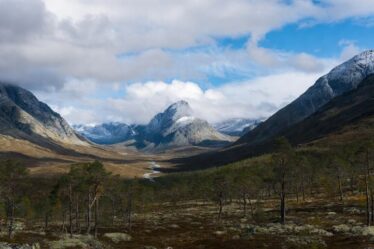
Slåttdalsskrevan is one of the most distinctive natural formations along Sweden’s High Coast and a well known destination for hikers visiting the region. The formation consists of a deep and narrow ravine that cuts straight through the rock, creating a passage that is around 200 meters long, approximately 7 meters wide, and up to 40 meters deep. Its scale and geometry make it one of the most recognizable landmarks in the area.
The ravine was formed through a combination of geological processes, primarily the fracturing of bedrock followed by the effects of the last ice age. As the inland ice retreated, meltwater and pressure widened existing cracks in the rock, eventually shaping the steep walls that define the site today. The result is a clean, almost symmetrical split that stands out even in a region known for its varied terrain.
Access to Slåttdalsskrevan is via marked hiking trails within Skuleskogen National Park, with routes of varying length depending on the starting point. The hike typically involves forest paths, uneven terrain, and moderate elevation changes, making it accessible to most visitors with basic hiking experience. The final approach leads directly into the ravine, where large boulders cover the ground and require careful footing.
One of the most common ways to experience the site is to pass through the crevice itself and then continue up to the viewpoint above. From there, visitors can look out over the coastline and surrounding forest, which provides a clear contrast between the enclosed space of the ravine and the open landscape beyond.