Comparing food prices between Sweden and the United States is more complicated than the usual assumption that Sweden is simply expensive and the US is cheap. The reality is more nuanced, and in many everyday situations the difference is smaller than people expect. Once you factor in quality, regulation, and what you actually get for your money, the comparison becomes even more interesting.
At a broad level, grocery prices in the United States are often slightly higher than in Sweden when you compare similar products. This goes against the common perception, but it reflects how the two systems are structured. Sweden has higher labor costs and a smaller market, which should push prices up, yet the overall grocery bill for a person cooking basic meals tends to land at a similar level or slightly lower than in many parts of the United States. In practice, that means everyday shopping for simple ingredients does not feel dramatically more expensive in Sweden.

The Swedish Worker is in general better paid than the US equivalent making certain foods more costly
One of the key differences lies in how prices are distributed. In the United States, there is a wide gap between cheap and premium food. You can find very low cost options, often heavily processed, but also very high priced products that match or exceed European quality standards. Sweden has a narrower range. Prices are generally more consistent, and the difference between budget and premium products is smaller. This creates a more predictable shopping experience, where the cheapest option is still reasonably good and the most expensive option is not dramatically better.
Food standards play a central role in this. Sweden follows European Union regulations, which set stricter limits on additives, antibiotics in livestock, and certain production methods. This creates a higher baseline level of quality across the board. Even lower priced products tend to meet these standards, which reduces the need for consumers to actively filter for quality. In the United States, the regulatory framework allows for a wider variety of production methods. This gives consumers more choice, but it also means that quality varies more depending on what you buy.
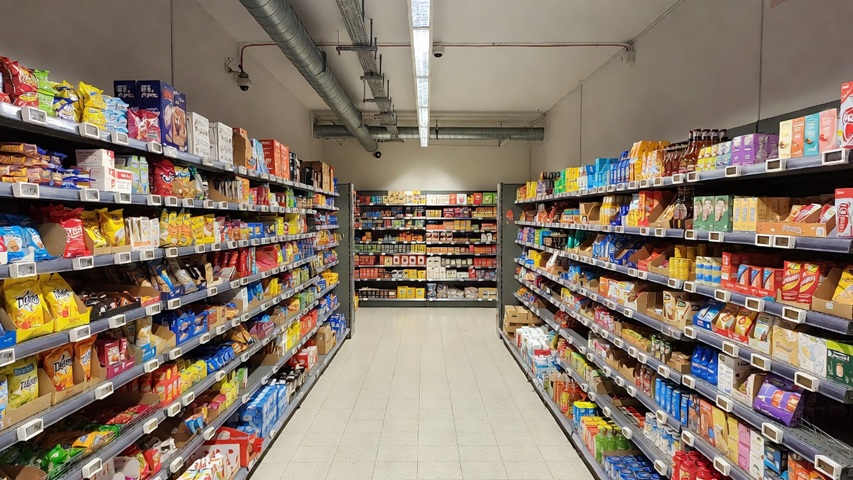
Swedish Supermarket are often much smaller than one in USA
Another difference is how food is sold. Swedish supermarkets are smaller, more standardized, and less focused on bulk purchasing. You rarely see the large scale warehouse stores that are common in the United States. Promotions exist, but they are usually less aggressive. This leads to fewer extreme bargains, but also fewer situations where prices are driven up by branding, packaging, or convenience. The result is a pricing structure that feels more stable and easier to navigate.
Spending patterns reflect this structure. A person in Sweden who cooks most of their meals can keep their monthly grocery costs within a fairly predictable range. In the United States, costs can vary more depending on shopping habits. Buying in bulk, choosing store brands, and avoiding prepared foods can bring costs down, but the system requires more active decision making to stay within budget.
Eating out shifts the comparison slightly. Restaurant meals in the United States often end up more expensive once taxes and tipping are included. In Sweden, prices are high at face value, but they usually include service and taxes, making the final cost clearer from the start. In both countries, however, eating out regularly is significantly more expensive than cooking at home.
What stands out most is that the difference is not simply about price levels, but about how the systems are built. Sweden offers consistency and a higher baseline standard, which makes it easier to manage costs without sacrificing quality. The United States offers more variation and more choice, but that flexibility comes with a wider spread in both price and quality. For someone traveling or living on a budget, Sweden tends to reward simple, consistent habits, while the United States requires more attention to how and where you spend your money.