
In many countries, personal information is treated as something that should be carefully guarded. Salaries are private, addresses are difficult to obtain, and government records are often hidden behind layers of bureaucracy. Sweden takes a very different approach. Here, a remarkable amount of information about citizens is publicly accessible, including income, property ownership, and in many cases home addresses. For people arriving from countries where privacy laws emphasize secrecy, this level of openness can feel surprising, even unsettling at first.
The roots of this transparency go back much further than the digital age. Sweden introduced one of the world’s first freedom of information laws in 1766. The principle behind it was simple but powerful: government documents should be accessible to the public so citizens can see how the state operates. This idea, known in Sweden as the principle of public access, became deeply embedded in Swedish governance and culture. Over time, the philosophy expanded beyond government documents to include many kinds of public records connected to individuals.
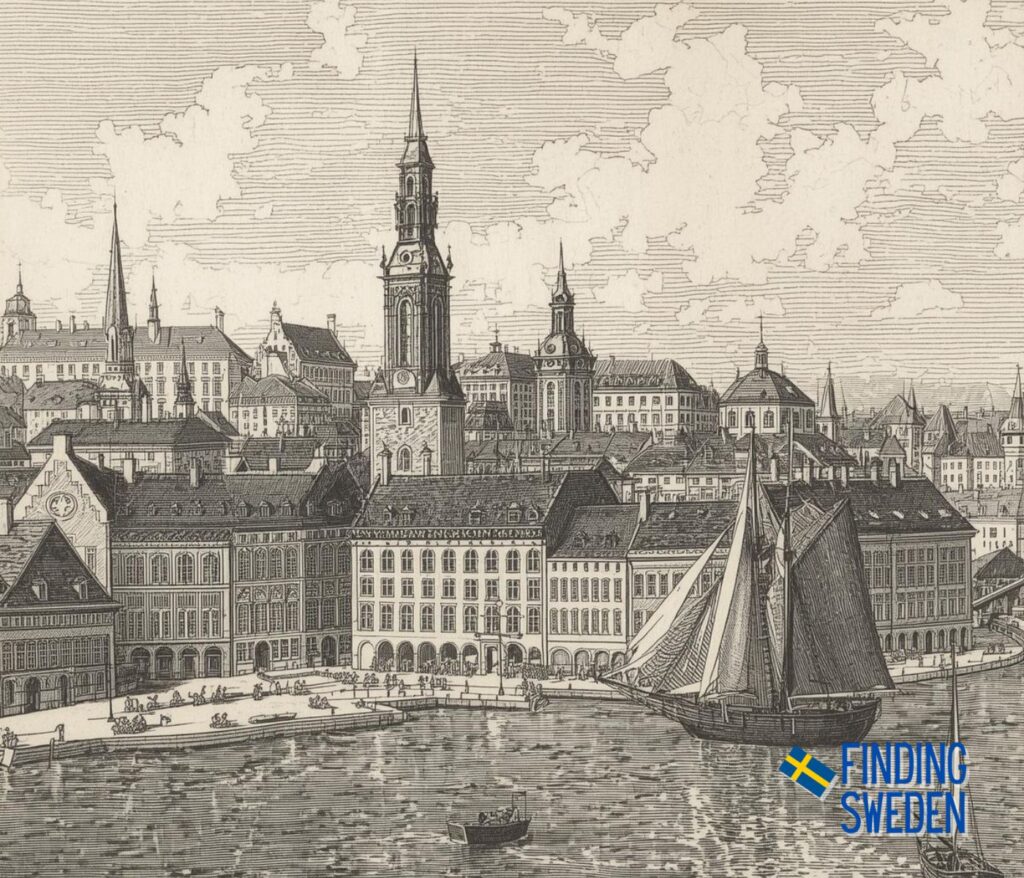
A sketch of how Stockholm might have looked like
One of the most discussed examples is income transparency. In Sweden, the tax authority records how much taxable income each person reports every year. Because tax documents are considered public records, anyone can technically request that information. In earlier decades this required contacting the tax agency directly, but today various databases and media outlets compile and publish annual income lists. Newspapers sometimes publish the highest earners in a region, and individuals can look up income levels of neighbors, colleagues, or public figures.
For newcomers, the idea that someone could check your salary may seem intrusive. In Sweden, however, it is often framed as a tool for fairness and accountability. Open records make it easier to identify tax evasion, corruption, or unexplained wealth. The system also allows journalists and researchers to examine economic inequality with real data rather than estimates. Transparency is seen as a way to strengthen trust in institutions rather than threaten it.
Addresses and property ownership are also widely accessible through public registries. Basic information about where someone lives can often be found through official population registers or commercial information services that compile publicly available data. Property records show who owns land or buildings, and in many cases the purchase price is also public information. These systems make it relatively straightforward to verify ownership and track transactions, which contributes to a real estate market with high levels of transparency.
The Swedish personal identity number plays an important role in organizing this information. Each resident receives a unique identification number used across government agencies, healthcare, banking, and other services. Because the number links different administrative systems, it allows records to be managed efficiently and accurately. While the number itself is treated with some caution, the data connected to it often remains accessible through public record frameworks.
The Ratsit Debate
One event that intensified the debate about openness in Sweden was the launch of the website Ratsit in 2006. The site made it extremely easy to search public records such as people’s income, addresses, and financial information online. Although this data had technically always been public through government records, Ratsit gathered it in one searchable database, which meant anyone could look up another person’s earnings in seconds.
For Swedes, this openness is closely tied to a broader cultural value of institutional trust. The assumption is that transparency discourages corruption and helps keep public life honest. When information flows freely, it becomes harder for individuals in positions of power to hide misconduct. The system also reinforces a sense that the government belongs to the public and therefore its records should be visible to that public.
At the same time, the system continues to evolve as technology changes the scale at which information can spread. Digital databases and searchable platforms have made public records easier to access than ever before, raising new debates about the balance between transparency and personal privacy. Swedish lawmakers periodically review how data is shared and how individuals can protect sensitive details while still maintaining the underlying principle of openness.
For foreigners encountering this system for the first time, the reaction is often mixed. Some appreciate the level of accountability it creates, while others find it difficult to adjust to the idea that personal financial information might not be entirely private. Yet within Sweden, the transparency has become a normal part of social infrastructure. It reflects a long standing belief that openness, even when uncomfortable, ultimately strengthens democracy and public trust.