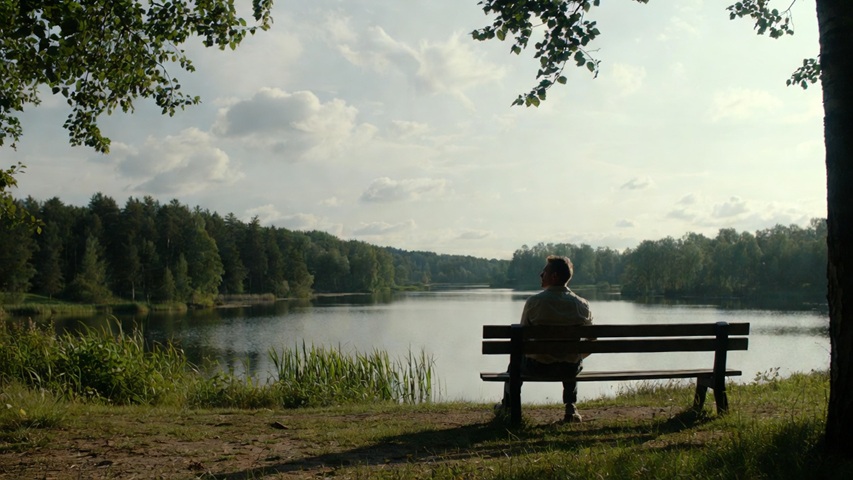
Or the reason Swedes are so Humble?
I remember the first time I felt it without being able to name it. We were sitting at a long wooden table outside Uppsala, the kind of late summer evening where the light refuses to leave and conversation stretches comfortably into the night. I told a story about something I had accomplished, nothing exaggerated, just a moment I was genuinely proud of, and I noticed a shift that was almost too subtle to describe. No one interrupted me, no one contradicted me, and yet the atmosphere tightened in a way that made the air feel slightly thinner. It was not disapproval in any obvious sense, but it was not acceptance either. It was something in between, a quiet correction delivered without words, and I understood almost immediately that I had crossed a boundary I had not even known existed.
Later that evening, someone tried to explain it to me, carefully, as if they were describing something fragile that could easily be misunderstood. They called it Jantelagen, and they spoke about it in a way that suggested both familiarity and discomfort, as though it was something everyone recognized but no one fully wanted to claim ownership of. The concept itself comes from Aksel Sandemose, who wrote about a fictional town governed by a set of unwritten rules, all circling around the same idea that no individual should ever consider themselves more important, more capable, or more worthy than anyone else. In Sweden, those ideas have taken on a life far beyond literature, becoming embedded in social behavior in ways that are difficult to point to directly but impossible to ignore once you start noticing them.
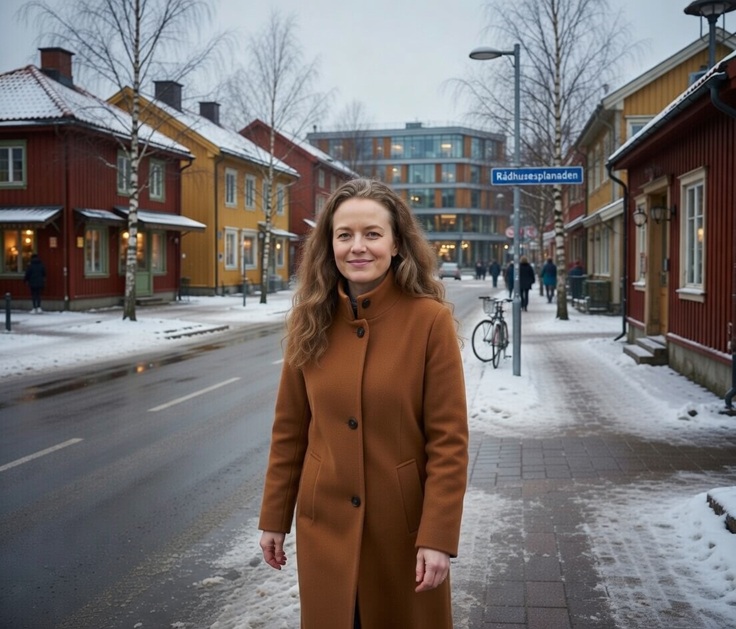
Umeå in 2026
What makes Jantelagen so powerful is that it does not operate through explicit enforcement or formal structures. There are no rules written down, no authority figures reminding you to stay within bounds, and no clear moment where someone tells you that you have gone too far. Instead, it works through a network of subtle reactions, small adjustments in tone, body language, and conversational rhythm that signal when someone is stepping outside what is considered acceptable. It is a system maintained collectively, where everyone participates, often without even realizing it, and where correction happens through implication rather than confrontation. Over time, these signals become internalized, shaping how people speak about themselves, how they present their achievements, and how far they allow their confidence to extend.
Living in Sweden means learning this language of subtlety, often without being consciously aware of it. People begin to moderate themselves early, softening statements that might otherwise sound too assertive, downplaying successes that in another context would be openly celebrated, and carefully balancing confidence with a layer of humility that ensures it never appears excessive. It becomes second nature to adjust before anyone else needs to react, to anticipate the boundaries rather than test them. What might appear to an outsider as modesty or restraint is often the result of a deeply ingrained social instinct, one that has been reinforced through countless small interactions over time.
See the video on Jantelagen by Maria Smith
At the same time, there is a strong narrative within Sweden that challenges the idea that Jantelagen is still relevant, or at least that it is as influential as it is often portrayed. Sweden presents itself as a modern, progressive society that values individuality, creativity, and innovation, and in many ways this is entirely accurate. The country has produced globally successful companies, influential cultural figures, and a reputation for forward thinking that suggests a high tolerance for ambition and self expression. Yet beneath that surface, there remains a tension between the desire to encourage individual success and the equally strong impulse to maintain social balance by ensuring that no one appears to rise too far above others.
This tension becomes particularly visible in how success is communicated. I have met entrepreneurs who have built remarkable businesses but describe their achievements as if they were the result of chance rather than intention. I have spoken to artists who diminish their own work before anyone else has the opportunity to judge it, and professionals who carefully frame their accomplishments in ways that shift focus away from themselves and toward collective effort or external circumstances. This is not simply a cultural preference for humility in the traditional sense, but rather a reflection of an underlying expectation that standing out too clearly can create discomfort, both for the individual and for those around them.
The Law of Jante is originally a Danish idea but got hold of Sweden to a much bigger extent than over the Danes. The Wikipedia article is good if you want to read more.
There is also a social cost to ignoring these expectations, although it rarely manifests in ways that are easy to identify or address directly. Those who choose to express themselves more openly, to speak confidently about their abilities, or to celebrate their successes without restraint may find that their social environment changes in subtle but meaningful ways. Invitations may become less frequent, conversations may feel slightly more distant, and a sense of belonging that once felt secure can begin to erode without any clear explanation. It is not exclusion in an overt sense, but rather a gradual shift that encourages adjustment without ever demanding it outright.
For those coming from outside Sweden, this dynamic can be difficult to interpret. On the surface, interactions remain polite, respectful, and inclusive, and there is rarely any direct conflict that would signal a problem. Yet at the same time, there can be an underlying sense that certain forms of expression are unwelcome, even if no one explicitly says so. Understanding Jantelagen requires paying attention to what is not said, to the spaces between words, and to the subtle cues that guide behavior in ways that are felt more than they are explained.
Interestingly, many Swedes who spend time abroad only begin to recognize the full extent of this influence when they are removed from it. In environments where self promotion is more accepted, or even expected, they may initially feel uncomfortable speaking about their own achievements or presenting themselves with confidence. Over time, however, some begin to adapt, discovering a different way of relating to their own success that feels both liberating and unfamiliar. When they return to Sweden, even temporarily, the contrast becomes clear, and the old patterns reappear almost immediately, as if they had never left.
There are signs that these patterns are evolving, particularly among younger generations who are shaped by global influences and more accustomed to expressing themselves openly through digital platforms. Social media has created spaces where self presentation is not only accepted but encouraged, and where visibility is often tied directly to opportunity. This has introduced new ways of navigating identity and success that do not always align with traditional expectations, creating a gradual shift in how Jantelagen is experienced and interpreted. Even so, the underlying principles have not disappeared, and they continue to influence behavior in ways that are both subtle and persistent.
What makes Jantelagen so complex is that it is not purely negative, nor is it easily dismissed as outdated or irrelevant. It is closely connected to values that many people in Sweden hold deeply, including fairness, equality, and a desire to avoid unnecessary hierarchy. These values contribute to a society that is often perceived as stable, cooperative, and considerate, where extreme displays of wealth or status are less common and where social interactions are generally characterized by a sense of balance. At the same time, the mechanisms that support these qualities can also limit individual expression, particularly when it comes to ambition and the desire to stand out.
The challenge, then, is not simply to reject Jantelagen, but to understand its impact and to recognize where it creates tension between collective values and individual potential. There is a difference between encouraging humility and discouraging confidence, between promoting equality and restricting growth, and between maintaining social harmony and quietly suppressing those who do not fit within its boundaries. These distinctions are not always easy to navigate, and they often exist in a space that is more emotional than rational, shaped by perception as much as by intention.
When I think back to that evening outside Uppsala, what stays with me is not the discomfort itself, but the realization of how something so intangible can shape behavior so effectively. No one needed to say anything directly, and yet the message was clear enough to alter the course of the conversation, and perhaps even how I chose to present myself afterward. That is the quiet strength of Jantelagen, and also its cruelty, not in the way it punishes, but in the way it gently, persistently reminds you where the limits are, and how easily they can be felt without ever being seen.