
In Sweden, social interaction is rarely guided by explicit rules or visible norms. Instead, it is shaped by a set of shared behaviors that are subtle, consistent, and largely unspoken. Visitors often sense them before they fully understand them. At first, the country can feel distant. People keep their space, conversations do not begin easily, and silence can seem unusually present. Yet beneath this first impression lies a coherent structure, a system of expectations that governs how individuals move, speak, and relate to one another in everyday life.
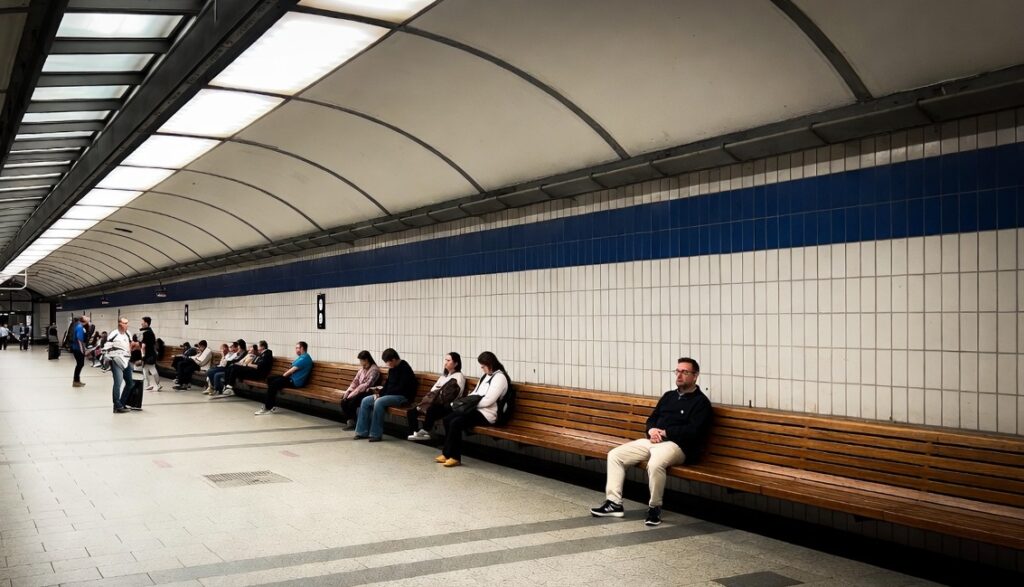
Choosing to sit closer to someone than necessary is a serious misstep in Sweden
One of the most immediate expressions of this system is physical distance. It becomes noticeable in ordinary situations, such as stepping onto a bus where seats are available, yet passengers remain spread out. Sitting next to someone without necessity is generally avoided, not because of discomfort, but as a form of consideration. This behavior extends to queues, where people maintain a clear gap between one another, and to public spaces where movement is adjusted to avoid unnecessary proximity. Individuals step aside early, give way without hesitation, and rarely force their path forward. Even in social environments, this distance persists initially, as interaction is not assumed or imposed. For someone unfamiliar with this norm, it may appear reserved or even unfriendly. Over time, however, it becomes evident that the intent is not to avoid others, but to respect their autonomy. When that distance is intentionally reduced, whether through conversation or proximity, it carries more meaning because it is a deliberate choice rather than a default behavior.

A moment of silence isn’t treated like a gap that needs to be filled
Silence reinforces this pattern. In many settings, it is not treated as a gap that needs to be filled, but as a natural state. On public transport, in cafés, or in shared spaces, the overall volume remains low, even when many people are present. Conversations occur, but they do not dominate the environment. There is little pressure to engage in small talk, and pauses are not immediately addressed. Speech tends to be measured, interruptions are uncommon, and people generally wait their turn without competing for attention. For visitors, this can initially create uncertainty, as silence in other cultures is often associated with discomfort or disinterest. In Sweden, it serves a different function. It allows interactions to remain intentional and reduces unnecessary noise, both literally and socially. When conversations do take place, they often move more directly into meaningful topics, without the need for extended preliminaries. Over time, silence is no longer perceived as absence, but as a stable and functional part of communication.

Eye contact is often controlled and deliberate
Eye contact follows a similar logic of moderation and balance. It is present, but controlled. Brief eye contact when passing someone serves as acknowledgment without inviting further interaction. It is neither avoided nor prolonged. In public spaces, people do not stare or actively seek engagement through visual cues. Their attention remains contained, respecting the same boundaries others observe. During conversations, eye contact is steady but not intense, naturally shifting rather than being held for emphasis. For someone unfamiliar with this pattern, it can feel ambiguous, as stronger visual signals are often expected elsewhere. In Sweden, however, subtlety is sufficient. A short glance, a nod, or a moment of shared attention conveys recognition without creating pressure. With time, visitors tend to adjust, reducing prolonged eye contact and becoming more comfortable with this understated form of acknowledgment.
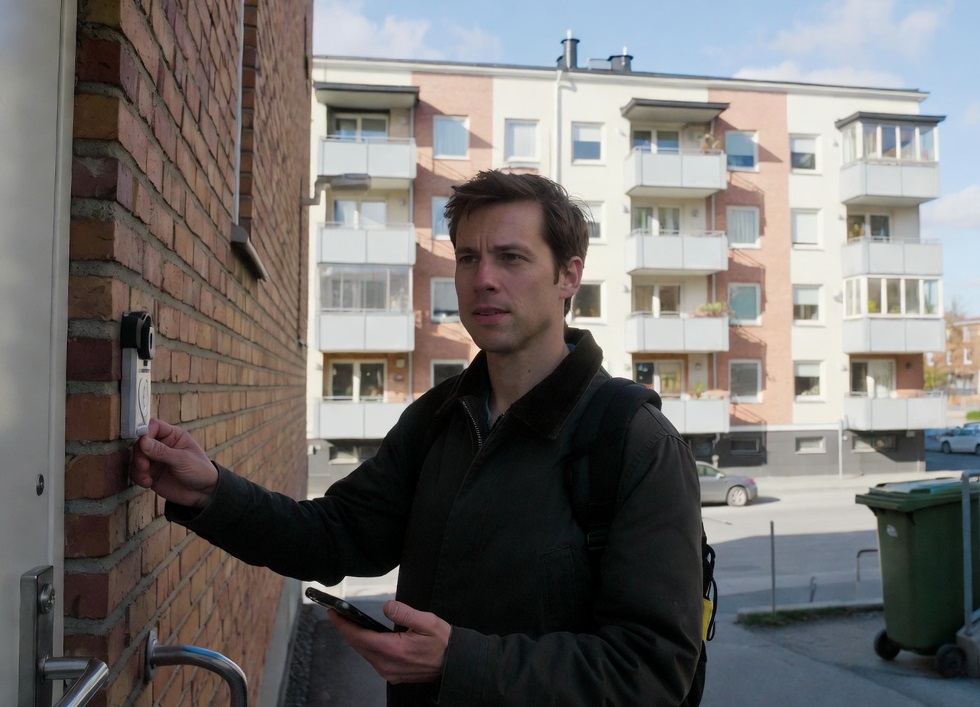
Only in very rare cases are visits spontaneous, this is something Swedes plan, days or weeks, in advance
Timing represents another important dimension of these social norms. It reflects an underlying respect for how individuals structure their time and personal space. Communication is rarely assumed to be immediate. Calls are typically reserved for appropriate hours, and messages are not expected to receive instant responses. Even among friends, spontaneous visits are less common than planned meetings. This does not indicate distance, but rather an assumption that others have their own routines and commitments. In professional contexts, punctuality is taken seriously, and agreements are expected to be followed. Meetings begin on time, and delays are communicated clearly. There is also a general patience in communication, where silence does not automatically signal a problem, but often indicates that the timing is not right. For visitors, this can feel structured compared to more spontaneous cultures, but it also creates reliability. Plans tend to be honored, and when time is set aside, it is given full attention.
Taken together, these behaviors form a consistent system that shapes social life in Sweden. What initially appears as distance becomes more clearly defined as a form of respect. Physical space reduces the risk of intrusion, silence limits unnecessary interaction, eye contact remains controlled to avoid pressure, and timing ensures that engagement happens within mutually understood boundaries. These are not formal rules, but widely shared habits that make public and social environments predictable and stable. For those who spend time in Sweden, adapting to these norms often happens gradually. What first feels unfamiliar begins to make sense, and eventually becomes intuitive.