To many americans, the idea sounds alarming at first. Babies bundled in thick blankets, parked outside cafés in subzero temperatures while their parents sit indoors drinking coffee. Toddlers sleeping in strollers on snowy balconies. Daycare centers lining prams along fences in the middle of winter. Yet in Sweden, this scene is not controversial. It is ordinary. Outdoor napping, even in cold weather, is a long established and widely accepted practice.
The foundation of the habit lies in Sweden’s broader relationship with nature and fresh air. Time outdoors is considered essential for health, resilience, and well being from a very young age. Children spend significant portions of their day outside at preschool regardless of season. Rain, snow, and cold are treated as conditions to dress for, not obstacles to avoid. The same logic extends to sleep. If fresh air is good for play, it is good for rest.
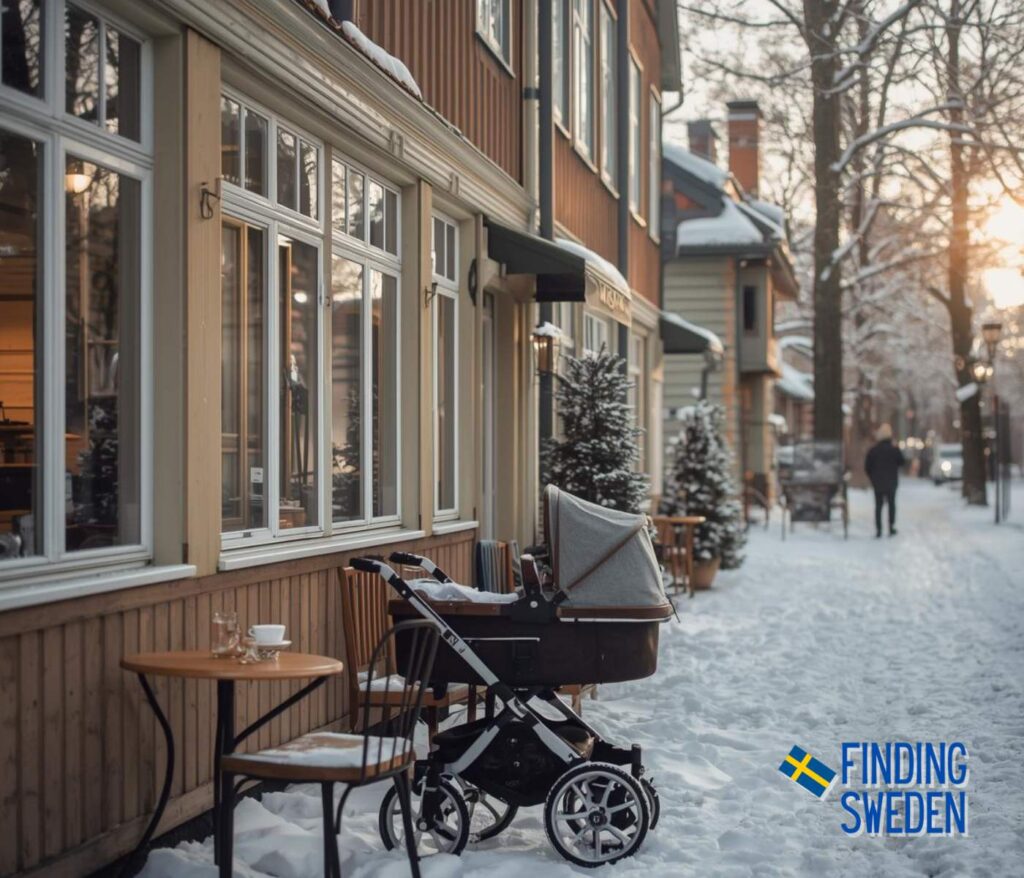
It’s common to let the baby stay outside while having a sit down coffee at a café, even in the middle of winter.
Swedish parents typically bundle babies carefully in insulated prams with wool layers, down sleeping bags, hats, and wind covers. Modern strollers are designed for Nordic climates, often with thick padding and protective covers that shield against wind while allowing airflow. Parents monitor temperature and comfort closely, and there are informal but widely understood limits. Extreme cold, strong winds, or unsafe conditions mean naps move indoors. The practice is not about exposure. It is about controlled fresh air within reasonable weather ranges.
Many preschools in Sweden incorporate outdoor naps into their daily routines. Rows of strollers may stand outside while children sleep, supervised by staff who check regularly to ensure comfort and safety. Baby monitors are common, and staff are trained to assess when weather conditions are appropriate. For Swedes, the sight communicates care rather than neglect. It signals that children are dressed properly and that fresh air is valued.
The belief behind the practice is partly cultural and partly practical. Cold air in winter is often dry and clean, especially in smaller towns and rural areas. Some parents feel their children sleep longer and more deeply outside. There is also a long standing idea that exposure to outdoor air supports stronger immune systems, though Swedish health authorities emphasize that proper clothing and supervision matter more than any specific temperature benefit. What is striking is not a medical claim but a cultural confidence that cold itself is not inherently dangerous.
Visitors from warmer climates often interpret the scene through a different lens. In countries where winter is harsh and infrastructure less adapted, cold can represent risk. In Sweden, infrastructure supports the practice. Homes are well insulated. Public spaces are designed with prams in mind. Clothing brands specialize in layered wool and weather resistant materials for infants. The entire ecosystem makes outdoor rest feel natural rather than extreme.
The practice also reflects a deeper societal trust. Leaving a stroller outside a café is rarely seen as risky in smaller communities. Social cohesion and low crime rates contribute to a sense of safety that makes outdoor napping possible. It is not simply about temperature tolerance but about a broader environment where parents feel secure.
For newcomers, the first time they see babies sleeping outside in winter can be disorienting. Over time, many begin to understand that the scene represents a different relationship with climate. Sweden does not attempt to eliminate winter from daily life. It integrates winter into routines. Children grow up experiencing cold as normal, not as an emergency to escape.
Outdoor napping is therefore less about bravado and more about adaptation. It signals that with the right preparation, most weather can be managed. It reflects a parenting culture that values independence, resilience, and connection to the natural environment from the earliest months of life. What initially appears surprising gradually becomes another example of how Swedish society aligns habits with its landscape rather than fighting against it.