

Sweden has built a waste management system so efficient that the country sometimes imports garbage from abroad to keep its recycling and waste to energy plants operating at full capacity. At first glance this sounds like environmental irony, a wealthy nation running out of trash. In reality it reflects decades of policy decisions, infrastructure investment, and cultural habits that treat waste not as an endpoint but as a resource.
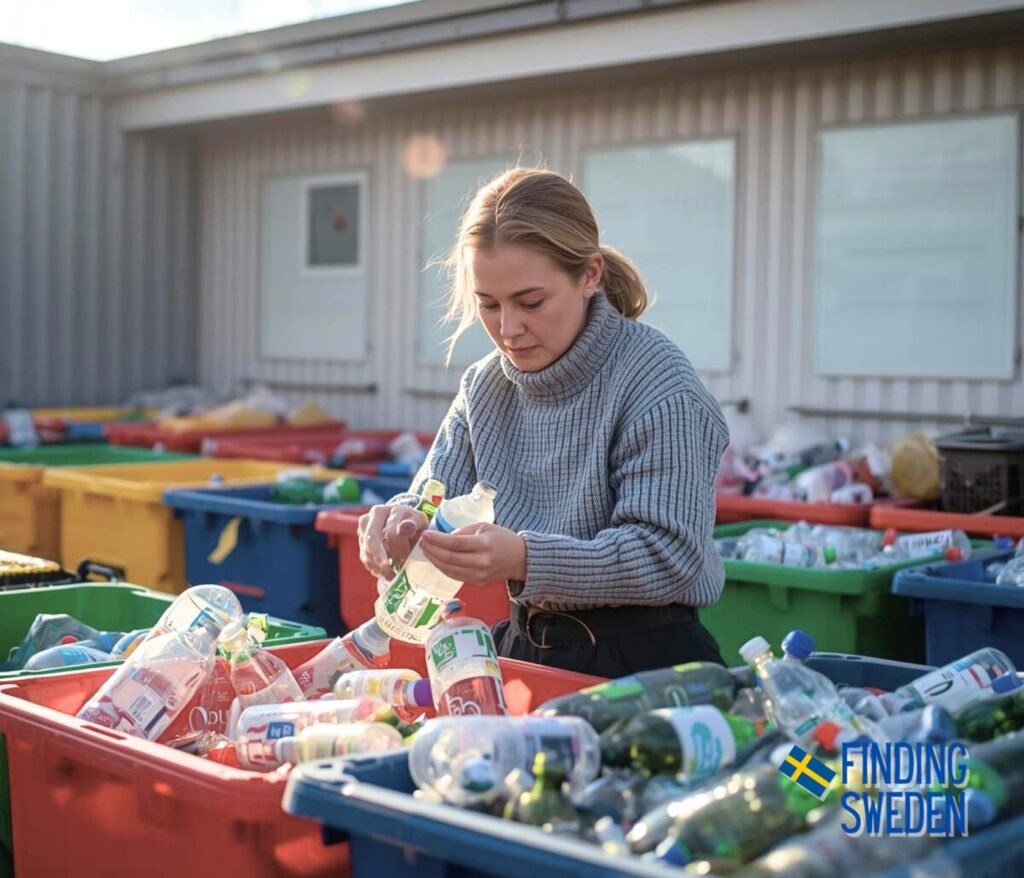
The foundation of this system lies in a hierarchy that prioritizes reducing and reusing materials before recycling and energy recovery. Swedish households sort their waste into multiple streams, often separating paper, plastics, metals, glass, food waste, and residual trash. Collection points are widely available and clearly labeled, and returning bottles and cans through deposit machines is part of everyday life. Over time, these habits have become normalized rather than exceptional. Children grow up learning how to sort waste correctly, and municipalities provide clear guidance. The result is that only a small percentage of household waste ends up in landfills.
Landfilling in Sweden is heavily restricted and taxed, making it both environmentally and economically unattractive. Instead, non recyclable waste is commonly directed to waste to energy facilities. These plants burn residual waste under controlled conditions to generate heat and electricity. The heat feeds district heating systems that warm homes during long Nordic winters, while electricity flows into the grid. Modern filtration technology captures pollutants and minimizes harmful emissions, and the ash that remains is further processed to recover metals and reduce environmental impact.
Did you know?
- Less than one percent of household waste in Sweden ends up in landfills, one of the lowest rates in the world
- Most non recyclable household waste is converted into energy through waste to energy plants that supply district heating and electricity
- Sweden sometimes imports waste from other European countries to keep its energy recovery facilities running at full capacity
- A nationwide deposit system for bottles and cans makes returning packaging part of everyday shopping routines
- Landfilling organic waste has been banned for years, pushing municipalities and households to separate food waste for biogas production
Because Sweden has reduced the amount of material sent to landfill and improved recycling rates, the volume of combustible waste generated domestically is sometimes insufficient to meet the capacity of its energy recovery plants. Rather than letting facilities operate below optimal levels, Sweden imports waste from other European countries. The importing country often pays Sweden to take this waste, since the alternative in their own system might be landfill disposal with higher environmental costs. In effect, Sweden provides a service by converting other nations’ residual waste into usable energy while adhering to strict environmental standards.
This arrangement does not mean Sweden has solved the problem of consumption. The country still produces waste, and environmental debates continue over the long term sustainability of waste to energy systems. Critics argue that incineration can reduce incentives to minimize waste at the source, while supporters contend that as long as materials cannot be fully recycled, energy recovery is preferable to landfill. The Swedish model operates within a broader European framework that seeks to move steadily up the waste hierarchy, using incineration as a transitional solution rather than a final answer.
Culturally, the system works because it is embedded in daily routines rather than treated as an occasional environmental gesture. Apartment buildings often have dedicated sorting rooms. Grocery stores host recycling stations in their parking lots. Public communication campaigns emphasize collective responsibility without dramatic rhetoric. Waste is framed as a shared challenge that can be managed pragmatically.
For outsiders, the idea that a country imports trash can sound like satire. Yet it highlights a practical reality. When infrastructure is designed to extract value from what remains after reduction and recycling, waste becomes fuel. Sweden’s approach reflects a broader societal pattern of long term planning, public trust in institutions, and willingness to invest in systems that operate quietly in the background. The visible outcome is a country where landfills are rare, recycling is routine, and even garbage participates in the energy cycle.



That’s amazing, I had no idea but I don’t understand how it works. How is the recycling collected?
Great question, because the system only sounds impressive once you understand the mechanics behind it.
In Sweden, recycling starts at home. Most households separate waste into multiple categories such as paper packaging, plastic packaging, metal, colored glass, clear glass, food waste, and residual waste. In apartment buildings, there is usually a dedicated recycling room in the basement or courtyard where residents sort everything into clearly marked containers. In houses, municipalities often provide multiple bins that are collected curbside on a schedule.
In addition to home sorting, there are neighborhood recycling stations placed near grocery stores and residential areas. These are mainly for packaging materials like cardboard, plastic, metal, and glass. People drop off sorted materials there at any time. Larger items such as electronics, furniture, and hazardous waste are taken to municipal recycling centers, which are free to use for residents.
Food waste is handled separately in many municipalities. Households use special paper bags for organic waste, which is then collected and sent to biogas facilities. The biogas produced is often used to fuel public buses and municipal vehicles, while the remaining digestate becomes agricultural fertilizer.
For bottles and cans, Sweden uses a deposit return system. When you buy a drink, you pay a small deposit. You get that money back by returning the container to a reverse vending machine in most supermarkets. The machine scans, sorts, and compacts the items automatically, making high return rates normal rather than exceptional.
Whatever cannot be materially recycled is sent to waste to energy plants. There it is burned under controlled conditions to produce heat and electricity. The heat feeds district heating systems that warm entire neighborhoods, which is particularly important during Swedish winters.
So the short answer is that recycling in Sweden works because sorting happens early, collection is convenient, and the infrastructure is built to handle each stream separately. It is less about a single breakthrough and more about a coordinated system that starts in every kitchen